 (Jan. 14, 2022) And, for regulators, don’t forget that April 12-14 are the dates for the National Regulator Meeting to be held in San Diego.
Exclusively open to state regulators only, the three-day meeting offers a forum for open dialogue on best practices, discussions around common challenges, and a platform where state regulators may exchange ideas with their colleagues from across the country.
Last year’s session was held virtually, but still attracted a record number of state regulators. Among the session topics addressed: climate change and the ramifications for regulators, payments systems, and capital issues.
Held at the Courtyard San Diego Downtown hotel, the Tuesday through Thursday event begins at 8 a.m. each day, ending at 4:30 on the first two days and at 11 a.m. on day three.
More details will be coming soon; see the link below to follow the latest developments.
LINK:
2022 National Regulator Meeting, April 12-14, San Diego
(Jan. 7, 2022) Regulators, mark your calendars for April 12-14, when the National Regulator Meeting will be held in San Diego.
Exclusively open to state regulators only, the three-day meeting offers a forum for open dialogue on best practices, discussions around common challenges, and a platform where state regulators may exchange ideas with their colleagues from across the country.
Last year’s session was held virtually, but still attracted a record number of state regulators. Among the session topics addressed: climate change and the ramifications for regulators, payments systems, and capital issues.
Held at the Courtyard San Diego Downtown hotel, the Tuesday through Thursday event begins at 8 a.m. each day, ending at 4:30 on the first two days and at 11 a.m. on day three.
More details will be coming soon; see the link below to follow the latest developments.
LINK:
2022 National Regulator Meeting, April 12-14, San Diego

Attendee Event Hub Access
 Event participants can access live sessions, download presentations, and rewatch on-demand videos in the Attendee Hub.
- Click on the button above for access
- You will be asked for a verification code, which is generated to your email and mobile number (if entered during registration). * Please check your spam/junk folders, if you don’t receive it within a minute or two.
- Once inside the Hub, move towards the top navigation and choose “Sessions” then find the session that interests you. Presentations will be loaded into individual sessions.
National Meeting for State Regulators Recap
 Click here to view the event photo gallery.
Photos can be downloaded and shared from the photo gallery. A full set of images will be available in next week’s NASCUS Report.
National Meeting Recap
Hosted in sunny San Diego, the National Meeting for State Regulators brought together more than 100 participants from across the country to network, learn and collaborate on the industry’s most pressing issues.
Working Together – Building Relationships
One of the benefits of attending the National Meeting is the ability to network and collaborate with other state agencies across the country. In addition to working within the state system, regulators need to collaborate with federal-level agencies as well. As a result, NCUA Chairman Todd Harper and NCUA Executive Director Larry Fazio participated in two separate sessions focused on building relationships and streamlining collaboration within overlapping priorities. During the three days of discussion, attendees expressed significant concern of two primary areas that affect everyone within the industry: evolving technologies/crypto and cybersecurity/ransomware attacks.
Evolving Technologies
In a world of “crypto-curious” entities (businesses and individuals), state supervisors need to define rapidly evolving technologies and determine the best approaches and regulation practices.
For example, in a presentation by Joseph Vincent, regulators learned about four separate categories of distinction within the digital asset spectrum, from decentralized to centralized. This includes 100% decentralized stablecoins [i.e., Ethereum] in Permissionless Public Shared Networks; to Permissioned, Public Shared Systems, [i.e., Ripple (XRP)]; to Permissioned Private Shared Systems [i.e., JPMorgan Coin]; and the 100% Centralized Ledger System [i.e., Digital Yuan and other Central Bank Digital Currencies].
Members also discussed the impacts, benefits, and challenges associated with Banking as a Service (BaaS) with Dr. Lamont Black. Including a clarification of terms and applications of this growing sector, “BaaS is a model in which chartered banks or credit unions integrate their digital banking services directly into the products of other non-bank businesses.”
While BaaS benefits include reducing IT costs, improved consumer experiences, and fee-based income, challenges include being characterized as “rent-a-charter” entities and giving consumer relationships to third-party providers – not the credit union. Another vital consideration, third-parties rely on partner financial institutions for regulatory management. Regulators and credit unions need to carefully weigh the implications for Field of Membership as third-party consumers are not always members of the credit union.
Breaches and Ransomware
“Ransomware-related data breaches have doubled in each of the past two years. At the current growth rate, ransomware attacks will pass phishing as the number one root cause of data compromises in 2022.”
As a result, cybersecurity and ransomware issues are top of mind for most supervisory agencies with some stating a ransomware attack would be their “worst nightmare.” Particularly with the heightened tensions around Ukraine, agencies are closely examining the cybersecurity landscape, including changes to cybersecurity reporting rules. At the current time, only a handful of agencies have dedicated cyber experts, while others are in the process of securing a dedicated position.
With the average ransomware payment nearing $350K, NASCUS brought in speakers CUNA Mutual Group’s Carlos Molina and Derek Laczniak, Director of Cyber Liability, M3 Insurance, to discuss the effects of ransomware on the industry. One of the most compelling segments of the presentation covered a “checklist of things to know” when responding to a ransomware attack. This includes:
- Know who is on your incident response team.
- Have multiple forms of communication available.
- Be prepared to make decisions about voluntarily taking systems offline.
- Be prepared with an internal communication plan.
- Do not allow employees to reach out to the threat actor themselves.
- You’ll be asked to sign two agreement letters within the first 24 hours.
- You do not need to have your own cryptocurrency on hand.
- You need underwriting approval to pay a ransom.
- Know your backups and understand that they are not always the answer.
- Think about whom the organization needs to tell and when.
Additionally, state supervisors discussed in-depth perspectives over the following:
- The need to retain, recruit, and replenish staff. With unemployment levels low in many states and the complication of virtual workplace demands from potential recruits, agencies struggle to be competitive and hire talented staff. This experience is common throughout the industry; as more and more Baby Boomers meet retirement, agencies are working to fill the shoes of seasoned staff in hybrid workplaces.
- Challenges within the real estate market. The pandemic has altered how employees view the modern workspace, and many employees are moving out of city centers requiring companies to rethink commercial spacing needs as part of their cost-benefit analysis. Additionally, some expressed concerns over a potential housing bubble given market changes spurred by the pandemic.
- A rise in credit unions mergers. Succession plan issues have been a strong driver for mergers in several states, with ‘one in three credit unions citing a lack of a succession plan’ as the main reason driving a merger.
- Wide spectrum of overlapping topics. The regulatory world is a complex environment and the National Meeting provided a platform for synergy on field of membership reform, interstate branching, CUSO advancements in FinTechs, and more.
Looking Ahead
As we move into the future, attendees noted sensitivities to other potential bubbles, including delinquencies. While delinquencies have been flat throughout the pandemic, supervisors are concerned with credit quality, student and auto loans, in addition to net-worth ratios.
Events such as these are essential to the state system, as they provide a stage for discovery, extensive issue remediation, and collaboration. NASCUS offers several more collaborative learning opportunities, including the 2022 Cannabis Symposium, S3: State System Summit, Directors’ Colleges, and more.

Click here to find an event near you.
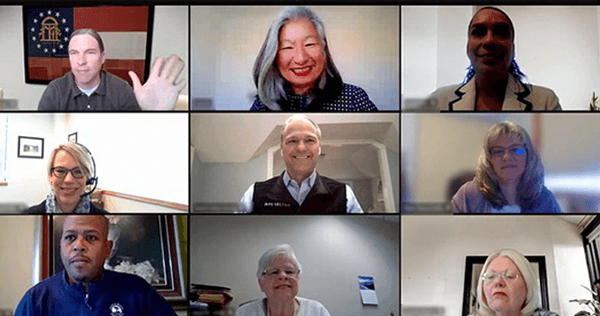
Regulators and NASCUS staff meet via video conference for the 2021 National Meeting
(March 19, 2021) Two days of discussion and focus on key issues this week highlighted the 2021 National Meeting of state regulators, which featured a record turnout of state regulators from across the nation and held this week.
Meeting in a virtual session this year, the annual dialogue for state regulators only brings together state supervisors from around the country to take a close look at key issues, discuss common challenges, and exchange ideas in the NASCUS-sponsored event. The meeting is not open to the public; attendance, specific discussions and proceedings are for regulators only.
“State regulators came prepared to discuss and share ideas at this year’s event, as they do every year,” said NASCUS President and CEO Lucy Ito. “The virtual aspect of the meeting seemed to have little impact on the participation, as indicated by the record crowd of registrants. The key component of this annual gathering is the dialogue it generates among the state supervisors, particularly as they address common challenges and goals for the state credit union system. This year’s discussion, spanning more than seven hours including presentations, was both lively and thought-provoking.”
The Wednesday session of the event featured marijuana banking guidance (from the Washington Department of Financial Institutions), the future of payment systems, and the future of capital in credit unions. NASCUS’ Ito facilitated a look “around the states” to give the regulators an update from around the nation; Regulator Board Chairman Rose Conner opened the program.
The Thursday session featured sessions on climate change as a safety and soundness issue, and a “fireside chat” with NCUA Board Chairman Todd Harper.
Speakers at the event included:
- David Cotney, former Massachusetts Commissioner of Banks (2010-16), and now senior advisor for FS Vector, who addressed climate change;
- Steven M. Rothstein, managing director Ceres Accelerator for Sustainable Capital Markets (which focuses on reducing financial impact of the climate crisis) and who also presented on climate change;
- Mark Dixon, director of payments innovation for the New England Automated Clearing House (NEACH), who focused on payments systems;
- Mike Townsley, policy counsel and director of regulatory policy for CSBS (who also addressed payment systems and finch charter issues);
- Mark Debree, managing principal for Catalyst Strategic Solutions, which focuses on interest rate risk, liquidity risk, strategic planning and other key issues for credit unions (and who addressed capital issues in a session moderated by NASCUS Executive Vice President and General Counsel Brian Knight).
Presentations and other resources from the event are available to regulator members only at the link below.
LINK:
2021 National Meeting Resources (regulator members only)
(Feb. 26, 2021) Registration for the NASCUS 2021 National Meeting of state regulators, March 17-18, is now open; all top regulators from each state are encouraged to attend.
The annual meeting, for state regulators only, brings together state credit union supervisors from around the country to take a close look at key issues, discuss common challenges, and exchange ideas in the NASCUS-sponsored event.
“The key component of this annual gathering is the dialogue it generates among the state regulators, particularly as they address common challenges and goals for the state credit union system,” said NASCUS’ Lucy Ito. “Each year, with input from the regulators, we assemble a list of topics and ideas that helps the regulators, as a group, determine solutions and paths forward. It’s a dynamic event with an emphasis on results.”
This year’s two-day event, to be held virtually, includes sessions on the future of payment systems, the future of capital in credit unions and the broader system, and; climate change as a safety and soundness issue.
NCUA Board Chairman Todd Harper is also scheduled to address the group and participate in dialogue during an exclusive session.
For more information, including the complete agenda and registration, see the link below.
LINK:
NASCUS 2021 National Meeting (regulator members only)
(Feb. 5, 2021) Two NASCUS events are on the horizon for March, and now’s the time to register to ensure participation in either (or both, in some cases).
On March 16, NASCUS hosts – in conjunction with the Wisconsin Department of Financial Institutions and The Wisconsin Credit Union League – the Wisconsin Executive Forum. It focuses on issues of interest to credit union board members and management. The three-hour, virtual meeting features an update on national issues and developments related to the COVID-19 pandemic (from NASCUS EVP and General Counsel Brian Knight), an overview of duties, liabilities and protections of credit union directors (from Wisconsin Credit Union League Director of Legal Affairs John C. Engel), and succession and strategic planning (from lawyer David Reed, partner in Reed and Jolly, PLLC).
The event runs from 9 a.m. to noon CT.
On March 17 and 18, NASCUS hosts the regulator-only National Meeting of state credit union supervisors. The event for top state regulators (also a virtual event) takes a close look at key issues and gives the supervisors a forum to discuss common challenges, and exchange ideas in a confidential setting. Among the issues likely up for discussion: climate change as a safety and soundness issue, the future of payment systems, and issues of interest with NCUA.
Agendas and registration for both events is posted on the NASCUS website.
LINK:
NASCUS Upcoming Events (WI Executive Forum, National Meeting)
(Jan. 15, 2021) Mark your calendars for four upcoming events from NASCUS in the months ahead – including the week after next.
- Jan. 25: NASCUS sponsors a webinar (for members only) outlining the Solar Winds/Orion security breach (by Russian actors), and its impact on the state system (both regulators and credit unions). The 90-minute session will take an in-depth look at the security breach, which was originally estimated to have affected about 18,0000 customers of the Solar Winds firm, and its Orion product – including a number of big federal agencies (such as the Treasury Department). There is no cost for the event, but it is open to members only.
- March 16: The Wisconsin Department of Financial Institutions, the Wisconsin Credit Union League and NASCUS team up to provide this annual session that looks at national and state issues (including the impact of COVID-19), duties, liabilities and protections of credit union directors, and succession and strategic planning. This is a virtual session that runs from 9 a.m. to noon (central time).
- March 17-18: NASCUS National Meeting (for state regulators only). This virtual meeting looks at the latest issues facing supervision and regulation of the state system, while also offering state regulators a forum where they can share ideas, discuss common issues, and uncover trends. The event this year will be virtual; registration is open only to state regulators.
- Summer: NASCUS Cybersecurity Conference with CUNA is scheduled to be held (with the precise date/time to be announced at a later time). The event has become the premier cybersecurity event within the credit union system, looking at the latest developments, trends and techniques for ensuring security of credit union systems. Like many other events in 2021, the cybersecurity conference will be held virtually.
For more information on any of these events, see the link below.
LINK:
NASCUS 2021 ‘Upcoming Events’
This annual event for top state regulators only takes a close look at key issues and gives the supervisors a forum to discuss common challenges, and exchange ideas in a confidential setting.
Resources and presentations
Click here for copies of the presentations and shared resources.
National Meeting Agenda
Please note this meeting is for Regulator members only.
March 17, 2021
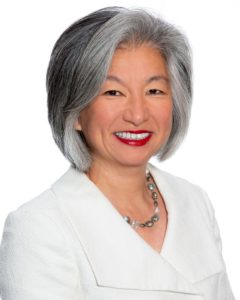
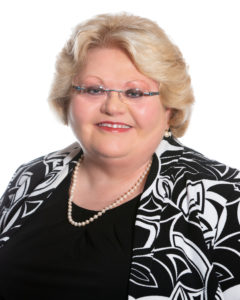 1:30 pm – 1:45 pm Opening Remarks: Lucy Ito, President/CEO, NASCUS; Rose Conner, Administrator, NC Credit Union Division
1:45 pm – 3:15 pm Around the States: Lucy Ito, President/CEO, NASCUS
3:15 pm – 3:30 pm Break
 3:30 pm – 4:30 pm Future of Payment Systems:
Mark Dixon, Director, Payments Innovation, NEACH and
Mike Townsley, Policy Counsel & Director of Regulatory Policy, CSBS
 4:30 pm – 5:30 pm The Future of Capital in Credit Unions and the Broader System:
Mark DeBree, Managing Principal, Catalyst Strategic Solutions
Moderator: Brian Knight, Esq., Executive Vice President & General Counsel
5:30 pm Wrap-up
March 18, 2021
1:30 pm – 1:40 pm Opening Remarks

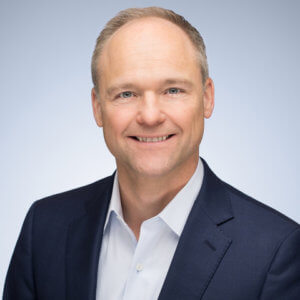 1:40 pm – 3:00 pm Climate Change as a Safety and Soundness Issue: Steven M. Rothstein, Managing Director, Accelerator at Ceres and David Cotney, Senior Advisor, FS Vector
3:00 pm – 3:15 pm Break
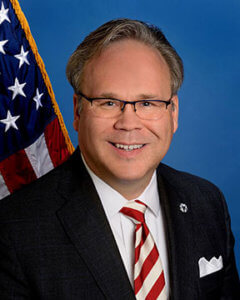 3:15 pm – 4:15 pm Fireside Chat: Todd Harper, NCUA Chairman and Lucy Ito, President/CEO, NASCUS
4:15 pm – 5:30 pm Wrap Up
(3/17/21)
2021 Speaker Bio
Mark Dixon, NEACH Director, Payments Innovation
Mark Dixon is a financial services veteran with more than 15 years of industry experience and a passion for banking, payments, and technology. He previously worked for multiple financial institutions of various sizes and types. He has served in capacities such as sales, operations, electronic services, and IT operations. He is currently the Director, Payments Innovation for NEACH (a payment association serving the New England market). In this role, Mark keeps abreast of industry updates related to the modernization of the payments landscape. He uses his research and connections to educate the NEACH membership about important developments to help them navigate the complexity of the payment ecosystem. Mark completed his Bachelor’s in Business Administration from Southern New Hampshire University where he concentrated on the study of organizational leadership and minored in information technology. He is currently working on his MBA with a focus on business intelligence studies. In addition, Mark is an Accredited ACH Professional (AAP), Accredited Payments Risk Professional (APRP), and a National Check Professional (NCP).
Mike Townsley, Policy Counsel & Director of Regulatory Policy, CSBS
Mike Townsley is Director of Regulatory Policy & Policy Counsel at the Conference of State Bank Supervisors (CSBS). Mike is a graduate of the University of Texas and the Georgetown University Law Center. He has been with CSBS since 2015. During his time at CSBS, Mike has worked on a wide range of bank and nonbank financial services policy issues including federal preemption, consumer protection, and CSBS’ litigation over the fintech charter. Mike also supports state regulators on several interagency bodies, including the Federal Financial Institutions Examination Council and the Financial Stability Oversight Council.
Mark DeBree, Managing Principal, Catalyst Strategic Solutions
As Managing Principal at Catalyst Strategic Solutions, Mark directs risk consulting, balance sheet advisory and broker/dealer services for credit unions nationwide. Formerly the organization’s Vice President of ALM Services, Mark has 16 years’ experience consulting credit unions on interest rate risk, liquidity risk, strategic planning, member deposit behaviors and mortgage servicing portfolios. Drawing on his broad industry expertise, Mark has also been instrumental in developing a number of new products and services that directly benefit client credit unions.
Since joining Catalyst Strategic Solutions as an ALM analyst in 2002, Mark has progressed through various roles in the ALM department to his current position. Previously, Mark worked as a financial analyst at Richmark Capital Corporation, where he was responsible for performing financial analysis on organizations seeking external capital. Mark also worked at Salomon Smith Barney in New York and has held FINRA Series 7 & 63 securities licenses.
Mark has both a bachelor’s and a master’s degree in business administration with a concentration in finance from Texas Tech University. He is a certified Chartered Financial Analyst (CFA). He is also a frequent speaker at credit union and examiner meetings.
David Cotney, Senior Advisor, FS Vector
David brings extensive regulatory experience to FS Vector and its clients. Previously, David was appointed as the Massachusetts Commissioner of Banks from 2010 to 2016 where he supervised all State-chartered banks and credit unions and State-licensed financial services providers. David began his regulatory career as a bank examiner with the Division of Banks in 1990.
From 2015 to 2016, David was appointed to serve as chairman of the Board of Directors of the Conference of State Bank Supervisors (CSBS). Additionally, from 2014 to 2015, David served as chairman of the CSBS Emerging Payments & Innovation Task Force which developed a Framework for the Regulation of Virtual Currency. In November 2013, David became the first State or federal financial regulator to testify before Congress on the subject of bitcoin and cryptocurrency. In 2017, David testified before the California Treasurer’s Cannabis Banking Working Group on the topic of a state-owned bank.
From 2013 to 2015, David served as chairman of the State Liaison Committee (SLC) of the Federal Financial Institutions Examination Council (FFIEC). David was also the first State member to serve as chairman of the FFIEC’s Task Force on Consumer Compliance.
David also serves as a member of the board of directors at Cross River Bank and as a member of the board of advisors for the Association for Data and Cyber Governance.
David earned a B.A. from Tufts University, an M.B.A. from Boston University, and an M.P.A. from the Harvard Kennedy School.
Steven M. Rothstein, Managing Director, Accelerator at Ceres
M. Rothstein is the founding Managing Director of the Ceres Accelerator for Sustainable Capital Markets. Ceres Accelerator aims to transform the practices and policies that govern capital markets in order to accelerate reduction of the worst financial impacts of the climate crisis and other sustainability threats. Steven’s 40 years of experience will be critical to explore the most effective strategies for the Accelerator to focus on and move capital markets towards climate sustainability.
Steven has had a successful career starting, managing and growing several non-profit, social change and government organizations. After college he was one of the founding team of Citizens Energy Corporation, the world’s only non-profit oil company. This enterprise, and its related organizations, grew to provide tens of millions of service for low income and needy individuals through oil, natural gas, electricity, energy conservation, pharmaceuticals and renewable energy. After several years, Steven went on to manage a Massachusetts $300 million human service state agency’s programs and facilities for people with intellectual disabilities. He then started and ran Environmental Futures, a management and market consulting company serving a wide range of enterprises in the US and internationally seeking to grow their environmental work. He also ran the New England market for Constellation’s entry and expansion into this market as a successful electricity broker. His career also includes running the world renowned, Perkins School for the Blind, as well as Citizen Schools and the John F. Kennedy Library Foundation.
He has worked at local, state, federal and international levels of government. Steven served on many non-profit and government boards. He has spoken and written extensively and worked with partners in the corporate, non-profit, government and philanthropy sectors.
Steven has a BA with Honors in Political Science from Williams College and an MBA from Northeastern University’s D’Amore – McKim School of Management. He also studied at Duke University’s, Institute of Public Policy. He and his wife, Susan, live in Somerville. They have two grown sons. He is currently on the Brady Campaign for Gun Safety Board and the Mass Civic Learning Coalition’s Steering Committee.
Todd M. Harper, Chairman, NCUA
Todd M. Harper was nominated to serve on the NCUA Board on February 6, 2019. The U.S. Senate confirmed him on March 14, 2019, and he was sworn in as a member of the NCUA Board on April 8, 2019. President Joseph R. Biden, Jr., designated him as the NCUA’s twelfth Chairman on January 20, 2021.
As NCUA Board Chairman, Mr. Harper serves as a voting member of the Financial Stability Oversight Council and represents the NCUA on the Federal Financial Institutions Examination Council and the Financial and Banking Information Infrastructure Committee.
Prior to joining the NCUA Board, Mr. Harper served as director of the agency’s Office of Public and Congressional Affairs and chief policy advisor to former Chairmen Debbie Matz and Rick Metsger. He is the first member of the NCUA’s staff to become an NCUA Board Member and Chairman.
Mr. Harper previously worked for the U.S. House of Representatives as staff director for the Subcommittee on Capital Markets, Insurance, and Government-Sponsored Enterprises and as legislative director and senior legislative assistant to former Rep. Paul Kanjorski (D-Pennsylvania). In these roles, he contributed to every major financial services law, from the enactment of the Gramm-Leach-Bliley Financial Services Modernization Act in 1999 through the passage of the Dodd-Frank Wall Street Reform and Consumer Protection Act in 2010.
During the Great Recession, Mr. Harper coordinated the first congressional hearing to explore the creation of a Temporary Corporate Credit Union Stabilization Fund. He also spearheaded staff efforts in the U.S. House to secure enactment of a law to lower the costs of managing both the Corporate Stabilization Fund and the National Credit Union Share Insurance Fund.
Mr. Harper led staff negotiations over several sections of the Dodd-Frank Act, including the Kanjorski amendment to empower regulators to preemptively rein in and break up “too-big-to-fail” institutions and proposals to enhance the powers of the Securities and Exchange Commission. He also developed the legislative framework for the bill that created the Federal Insurance Office to monitor domestic and international insurance issues.
Mr. Harper holds an undergraduate degree in business analysis from Indiana University’s Kelley School of Business and a graduate degree in public policy from Harvard University’s Kennedy School of Government.