The Consumer Financial Protection Bureau (CFPB) today released a new issue spotlight on the expansive adoption and use of chatbots by financial institutions. Chatbots are intended to simulate human-like responses using computer programming and help institutions reduce the costs of customer service agents. These chatbots sometimes have human names and use popup features to encourage engagement. Some chatbots use more complex technologies marketed as “artificial intelligence,” to generate responses to customers.
Communities across the nation are working to prevent and respond to elder financial exploitation, which threatens the financial security of millions of older adults each year.
The Consumer Financial Protection Bureau (CFPB) helps state and local organizations create and develop Elder Fraud Prevention and Response Networks, often working with partners to host in-person convenings of local or regional stakeholders.
But what happened during the COVID-19 pandemic, when people were no longer able to convene in person? When reported fraud and scams hit an all-time high? And what happens when scammers target traditionally underserved populations? Here is how the CFPB and elder justice advocates adapted to meet the moment.
CFPB Finds that Billions of Dollars Stored on Popular Payment Apps May Lack Federal Insurance
The Consumer Financial Protection Bureau (CFPB) published an issue spotlight on digital payment apps heavily used by consumers and businesses. The analysis finds that funds stored on these apps may not be safe in the event of financial distress, since the funds may not be held in accounts with federal deposit insurance coverage. The CFPB also issued a consumer advisory for customers holding funds in these apps and how they can make sure their funds remain safe.
Today’s issue spotlight finds that:
- More than three quarters of adults in the United States have used a payment app. Younger customers’ use of these payment app services is especially prevalent. Approximately 85 percent of consumers aged 18 to 29 have used such a service. Transaction volume across all service providers in 2022 was estimated at approximately $893 billion, and is projected to reach approximately $1.6 trillion by 2027.
- Nonbanks can earn money when users store funds on their platforms. When users of these digital apps receive payments, the funds are not usually swept automatically to the recipient’s linked bank or credit union account. Instead, companies hold and invest the funds. These activities are not typically subjected to the same oversight that an insured bank or credit union faces. Apps also earn money through fees on merchants and other ancillary services, like selling crypto-assets and offering affiliated financial products.
- Funds sitting in payment app accounts often lack deposit insurance. When users receive payments, through these apps, these funds are not automatically swept into their linked bank or credit union account. In addition, payment app companies do not necessarily store customer funds in an insured account through a business arrangement with a bank or credit union. The company’s investments carry risk and if it were to fail, customers could lose their funds.
- User agreements often lack specific information. User agreements for digital payment apps often lack information on where funds are being held or invested, whether and under what conditions they may be insured, and what would happen if the company or the entity holding the funds were to fail. Read more
The Consumer Financial Protection Bureau (CFPB) has ordered installment lender OneMain Financial to pay $20 million in redress and penalties for failing to refund interest charged to 25,000 customers who cancelled purchases within a purported “full refund period,” and for deceiving borrowers about needing to purchase add-on products to receive a loan.
The CFPB found that OneMain:
- Tricked borrowers into signing up for optional products: OneMain customers were led to believe that they could not receive a loan without signing up for an add-on product. Some employees added the products to paperwork without verbally informing the consumer that the products were included or optional, a practice referred to internally as “pre-packing.” If the consumer identified the products and asked for their removal, employees were expected to make it seem difficult to remove the products. In other cases, employees obscured written disclosures from consumers’ view, or verbally contradicted them.
- Kept $10 million in interest charges despite its “full-refund” policy: OneMain told borrowers they would receive a “full refund” on add-on purchases if they cancelled within a certain period (generally 30 days). However, OneMain unfairly failed to refund interest charges for about 25,000 borrowers who signed up for add-ons such as roadside assistance benefits, identity theft protection, or entertainment discounts. Because of how OneMain precomputed interest on some loans, customers had already been charged significant amounts of interest that the company did not refund. Over the past four years, OneMain kept approximately $10 million in interest charges attributable to add-ons cancelled within its purported “full refund period.” Read more
May 24, 2023
Overdraft/NSF Revenue in Q4 2022 down nearly 50% versus pre-pandemic levels
Overdraft/NSF revenue for the fourth quarter of 2022 alone was approximately $1.5 billion lower than in the fourth quarter of 2019 – a decrease of 48% compared to before the pandemic, suggesting an annual reduction of over $5.5 billion going forward. This decrease suggests average annual savings of more than $150 per household that incurs overdraft or NSF fees; many households have saved much more.
May 24, 2023
Mortgage data shows that borrowers could save $100 a month (or more) by choosing cheaper lenders
The CFPB took a look at how mortgage rates paid by consumers vary across lenders. This phenomenon, called price dispersion, exists in virtually every segment of the mortgage market, including loans backed by Fannie Mae and Freddie Mac, Federal Housing Administration loans, U.S. Department of Veterans Affairs (Veterans Affairs) loans, as well as jumbo loans.1 We analyzed Home Mortgage Disclosure Act data from 2021 to quantify the magnitude of price dispersion.2
We found that price dispersion for mortgages is often around 50 basis points of the annual percentage rate. To put this number in context, the median loan amount in 2021 was close to $300,000 and the median interest rate was 3 percent.3 The monthly payment for such a 30-year fixed loan is $1,265. The monthly payment for a 3.5 percent interest rate loan on a loan of the same amount is $1,347 – a difference of $82 a month (a 6.5 percent higher payment). Interest rates have increased drastically since 2021, but the math remains similar in a higher-interest rate environment. Keeping the loan amount at $300,000, the monthly payments for a 30-year fixed loan with a 6.5 percent interest rate and a 7 percent interest rate are, respectively, $1,896 and $1,996 – a difference of $100 a month (a 5.3 percent higher payment). In a higher interest-rate environment, with monthly payments being much higher overall, this $100 a month difference might matter even more as borrowers potentially are more stretched to make ends meet. Read more
May 23, 2023
CFPB Action to Require Citizens Bank to Pay $9 Million Penalty for Unlawful Credit Card Servicing
Citizens failed to properly manage and respond to customers’ credit card disputes and fraud claims
Today, the Consumer Financial Protection Bureau (CFPB) reached a settlement to resolve allegations that Citizens Bank violated consumer financial protection laws and rules that protect individuals when they dispute credit card transactions. The CFPB alleges that Citizens Bank failed to properly manage and respond to customers’ credit card disputes and fraud claims. If entered by the court, the order, among other things, would require Citizens Bank to pay a $9 million civil money penalty.
Citizens Bank is a large bank headquartered in Providence, Rhode Island, with branches and ATMs in 14 states and the District of Columbia. Citizens Bank is a subsidiary of Citizens Financial Group (NYSE:CFG), which reported $222 billion in assets as of March 31, 2023, and is one of the 15 largest consumer banks in the country. The CFPB originally sued Citizens Bank in January 2020.
Federal law protects individuals from credit card billing errors and fraud. The Truth in Lending Act and the rules that implement it lay out specific steps that individuals must take to report credit card disputes and fraud claims. If a person reports a billing error or fraud, the credit card issuer is required to investigate the allegations, send certain notifications to the individual, and, when claims are valid, refund the error or fraud amount. Read more
New circular addresses illegal “reopening” of deposit accounts that can hit consumers with junk fees
 The Consumer Financial Protection Bureau (CFPB) issued a new circular affirming that a bank may violate federal law if it unilaterally reopens a deposit account to process transactions after a consumer has already closed it. The CFPB has observed in complaints that even after a consumer completes all the required steps to close an account, their bank has “reopened” the closed account and assessed overdraft and nonsufficient funds fees. Consumers have reported to the CFPB that financial institutions have also charged account maintenance fees upon reopening, even if the consumer was not required to pay account maintenance fees prior to account closure.
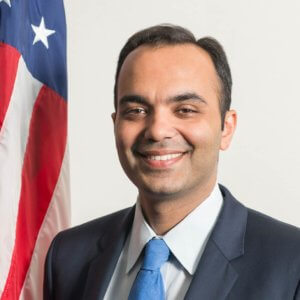
“When a bank unilaterally chooses to open an account in someone’s name after they have already closed it, this is a fake account,” said CFPB Director Rohit Chopra. “The CFPB is acting on all fronts to halt the harvesting of illegal junk fees.”
Closing a bank account can take significant time and effort by the consumer to complete, and the bank may require a consumer to provide a certain period of advance notice prior to closing the account to allow for the financial institution to process any pending debits or deposits. Consumers often must also settle any negative balances in their deposit account before being able to close it. Upon closure of the deposit account, the consumer may no longer have access to their account information or receive notifications of account activity.
Today’s circular confirms that banks may risk violating the Consumer Financial Protection Act’s prohibition on unfair acts or practices by unilaterally reopening closed accounts. Consumers may incur overdraft, nonsufficient funds, or monthly maintenance fees when a closed account is reopened by the bank. This practice may also enable third parties to access a consumer’s funds without consent. If reopening the account overdraws the account, banks may also furnish negative information to consumer reporting companies if consumers do not settle negative balances quickly. Consumers often cannot reasonably avoid the risk of substantial injury caused by this practice because they cannot control a third party’s attempt to debit or deposit money, the process and timing of account closure, or the terms of deposit account agreements.
The CFPB previously ordered USAA Federal Savings Bank to pay more than $15 million in consumer remediation and penalties for, among other things, violating the Consumer Financial Protection Act by reopening deposit accounts consumers had previously closed without seeking prior authorization or providing adequate notice. Today’s circular highlights for regulators that an institution’s unilateral reopening of a deposit account that a consumer previously closed can constitute an unfair act or practice under the Consumer Financial Protection Act.
CFPB Proposes New Consumer Protections for Homeowners Seeking Clean Energy Financing
The Consumer Financial Protection Bureau (CFPB) proposed a rule to implement a Congressional mandate to establish consumer protections for residential Property Assessed Clean Energy (PACE) loans.
Related reading: The CFPB issued a Notice of Proposed Rulemaking related to residential Property Assessed Clean Energy (PACE) financing. The CFPB also issued a Fast Facts Summary that provides a high-level overview of the proposed rule and an Unofficial Redline.
Additionally, the CFPB has published a report on PACE financing, which found that the loans cause an increase in mortgage delinquency and other negative credit outcomes for some borrowers.
Comments on the Notice of Proposed Rulemaking are due July 26, 2023, or 30 days after publication in the Federal Register, whichever is later.
You can access the Notice of Proposed Rulemaking, Fast Facts Summary, Unofficial Redline, and Report here: www.consumerfinance.gov/rules-policy/rules-under-development/residential-property-assessed-clean-energy-financing-regulation-z/.
Today, the Consumer Financial Protection Bureau (CFPB) joined four other federal financial regulatory agencies, along with state bank and state credit union regulators, in issuing a statement that the use of United States Dollar LIBOR (USD LIBOR) panels will end on June 30, 2023.
CFPB issued an Advisory Opinion related to time-barred debts.
The Advisory Opinion affirms that the FDCPA and the Debt Collection Rule prohibit FDCPA-covered debt collectors from suing or threatening to sue to collect a time-barred debt. The Advisory Opinion also affirms that this prohibition may apply to debt collectors that bring state-court mortgage foreclosure actions to collect on time-barred mortgage debt.
You can access the Advisory Opinion here: www.consumerfinance.gov/compliance/advisory-opinion-program/.
CFPB Issues Guidance to Protect Homeowners from Illegal Collection Tactics on Zombie Mortgages
Today, the Consumer Financial Protection Bureau (CFPB) issued guidance on debt collectors, covered by the Fair Debt Collection Practices Act, threatening to foreclose on homes with mortgages past the statute of limitations.
Related Reading: Prepared Remarks of Director Rohit Chopra on Zombie Mortgage Debt
Director Chopra hosted a discussion with local community organizations, advocates, leaders, and members of the public about “zombie” second mortgages and other debt collection issues.
Director Chopra provided remarks on an interagency press conference to announce the Joint Statement on Enforcement Efforts Against Discrimination and Bias in Automated Systems.
Four federal agencies jointly pledged today to uphold America’s commitment to the core principles of fairness, equality, and justice as emerging automated systems, including those sometimes marketed as “artificial intelligence” or “AI,” have become increasingly common in our daily lives.
Courtesy of PYMNTS.com
 The words “systemic” and “risk” have been on everyone’s lips in the past few weeks.
And for Big Tech, at least, the regulatory gaze will only widen, eyeing the payments ambitions of the biggest platforms, and whether new payment types — stablecoins among them — might scale enough on those platforms to be a cause for vigilance.
The Consumer Financial Protection Bureau (CFPB) efforts may get renewed vigor in the wake of the fact late last month federal appeals court ruled that the CFPB’s funding via the Federal Reserve is constitutional.
And this week, appearing on Yahoo Finance Live, CFPB Director Rohit Chopra gave some insight into the areas ripe for consideration and review — and perhaps some new regulations too.
He said the Financial Stability Oversight Council has the authority to “designate certain payment activities [including] payment clearing and settlement as either systemic or likely to become systemic.”
Among the payment methods that need to be examined, per Chopra’s commentary: stablecoins, which could conceivably start “riding the rails of a Big Tech platform or a card network.”
Who’s on the Platform and Who’s Not
“There are some questions we have,” he said of the platforms, “about how do some of these services decide to kick a merchant off or kick a user off? How are they actually using all the data that they’re collecting through our phones and through what we buy?”
He noted that beyond the ability to craft targeted ads, there may be a “move to a world with personalized pricing.”
The regulators, he said, have been looking, and will continue to look, at the cloud services offered by Big Tech players — with particular concern around the risks tied to outage or attacks by fraudsters and hackers, non-state and state actors alike. The risks extend to healthcare, energy and other sectors, he said.
“It’s hard to know what specific tools we’ll use,” he told the finance site, as to what guardrails, regulations and policies may be on the horizon.
As reported by PYMNTS in recent weeks, the drumbeat for stablecoin regulation is likely to grow louder after the stablecoin USDC briefly lost its dollar peg. USDC dipped to as low as 86 cents after the issuer of the stablecoin, Circle, said that some of the funds backing the stablecoin were held at Silicon Valley Bank.
Big Tech’s financial services roadmaps may be determined in part by open banking, where as banks share account data and other details (with consumer permission), they can offer a range of financial products. There’s also, of course, the ability for Big Tech to apply for banking licenses. Apple’s latest push into buy now, pay later (BNPL), with Apple Pay Later, is but one of the more recent examples of the lines blurring between payments, providers and platforms.
 PUBLISHED CFPB launches Small Business Lending (SBL) Help
The CFPB issued the small business lending rule. You can read the rule on the CFPB website. To help financial institutions implement and comply with the small business lending rule, the CFPB is launching a dedicated regulatory and technical support program called SBL Help. SBL Help can provide oral and written assistance to financial institutions about their data collection and reporting obligations under the final rule.
You can submit your questions to SBL Help here: https://sblhelp.consumerfinance.gov/.
SBL Help is the latest resource from the CFPB to help financial institutions implement and comply with the small business lending final rule. As announced last week, the CFPB published a small business lending implementation and guidance webpage, which contains several regulatory implementation resources about the final rule, and a small business lending data webpage, which contains several technical resources about submitting small business lending data to the CFPB.
The CFPB plans to publish additional resources to help financial institutions implement and comply with the small business lending final rule. The CFPB has published a video that introduces the types of implementation and compliance support it provides and the timeline these materials are typically released.
You can watch the Introduction to Regulatory Implementation and Guidance video here: https://www.youtube.com/watch?v=cKc_BBxqOwM.
The CFPB took action against James R. Carnes and Melissa C. Carnes, both individually and as co-trustees of the James R. Carnes Revocable Trust and the Melissa C. Carnes Revocable Trust for hiding money through a series of fraudulent transfers in order to avoid paying more than $40 million in restitution and penalties for illegal payday lending activities. James Carnes attempted to evade a CFPB order requiring him and his company, Integrity Advance, to make harmed consumers whole and pay penalties to the CFPB’s victims relief fund. The CFPB is seeking injunctive relief, as well as asking the court to award a money judgment for the value of the fraudulently transferred funds.
James Carnes was the chief executive officer of Delaware-based Integrity Advance, a short-term, online lender. James Carnes and Melissa Carnes reside in Mission Hills, Kansas, which is also the principal place of administration of their revocable trusts.
PUBLISHED CFPB Issues Guidance to Address Abusive Conduct in Consumer Financial Markets
Policy statement details post-financial crisis prohibition on illegal abusive conduct
The Consumer Financial Protection Bureau (CFPB) issued a policy statement that explains the legal prohibition on abusive conduct in consumer financial markets and summarizes over a decade of precedent. The CFPB leads enforcement and supervision efforts to identify and end abusive conduct against consumers. In 2010, in response to the financial crisis, Congress passed the Consumer Financial Protection Act, and created the prohibition on abusive conduct. The Act tasks the CFPB, federal banking regulators, and states with the responsibility to enforce the prohibition, and puts the CFPB in charge of administering it. The policy statement will assist consumer financial protection enforcers in identifying wrongdoing, and will help firms avoid committing abusive acts or practices.
More than 78,000 consumers harmed by College Financial Advisory and Student Financial Resource Center will receive checks in the mail this month.
Learn more about the case and redress payments
In 2015, the CFPB filed a complaint in federal court against College Financial Advisory and Student Financial Resource Center for illegally charging millions of dollars for sham financial services. Global Financial Support, Inc. is a California corporation owned by Armond Aria that operated under the names College Financial Advisory and Student Financial Resource Center. According to the CFPB complaint, Aria and his businesses sent millions of deceptive solicitation packets to students and their families claiming to apply for financial aid services and to match prospective students with targeted financial aid assistance programs for a fee, and mispresented that students would lose their opportunity to receive financial aid unless they paid the company and applied by a stated deadline. In reality, consumers did not receive what they paid for, while the company reaped millions of dollars from the scheme. Learn more about the enforcement action.
The total distribution amount is $4,737,472.17, and the money will come from the CFPB’s Civil Penalty Fund.
CFPB Issues Determination that State Disclosure Laws on Business Lending are Consistent with the Truth in Lending Act
The Consumer Financial Protection Bureau (CFPB) announced it has determined that state disclosure laws covering lending to businesses in California, New York, Utah, and Virginia are not preempted by the federal Truth in Lending Act. The CFPB examined the state disclosure laws to determine if they were inconsistent with and preempted by the Truth in Lending Act. After analyzing public comments on its preliminary determination, the CFPB affirms there is no conflict because the state laws extend disclosure protections to businesses and entrepreneurs that seek commercial financing. Read more
PUBLISHED MAR 24, 2023
CFPB Want to Know About Your Experiences with Data Brokers
We often don’t get to choose the companies that control our most personal and sensitive information. Data brokers is a term to describe those companies that collect, aggregate, sell, resell, license, or share our personal information with others.
Data brokers play a decisive role in our financial lives, impacting whether we’re able to buy a home or find a job. The CFPB wants to hear from the public about the business practices of data brokers and how those practices have directly affected people’s lives. We have released a Request for Information to understand the full scope and breadth of the industry and whether all data brokers are playing by the same rules.
Congress passed the Fair Credit Reporting Act in response to concerns about how companies were creating and selling detailed dossiers of consumers’ personal information. Our inquiry seeks information about data broker business practices employed in the market today to inform the CFPB’s efforts to administer the law, including planned rulemaking under the FCRA. Read more
CFPB Enhances Tool to Promote Competition and Comparison Shopping in Credit Card Market
Today, the Consumer Financial Protection Bureau (CFPB) launched launched an improved survey of credit card issuers that can help consumers and families compare interest rates and other features when shopping for a new credit card. Americans pay $120 billion in credit card interest and fees each year, which contributes to the almost trillion dollars in nationwide household credit card debt. In the current high-rate environment, it is important for Americans to be able to be able to accurately compare products. Upgrades to the CFPB’s terms of credit card plans survey are designed to increase price competition in the credit card market by allowing people to comparison shop for the best prices and products. The survey will also help smaller credit card issuers, who often offer the lowest rates, reach comparison shoppers. Read more
2022 HMDA Data on Mortgage Lending Now Available
The Home Mortgage Disclosure Act (HMDA) Modified Loan Application Register (LAR) data for 2022 are now available on the Federal Financial Institutions Examination Council’s (FFIEC) HMDA Platform for approximately 4,394 HMDA filers. The published data contain loan-level information filed by financial institutions and modified to protect consumer privacy.
To increase public accessibility, the annual loan-level LAR data for each HMDA filer are now available online. Previously, users could obtain LAR data only by making requests to specific institutions for their annual data. To allow for easier public access to all LAR data, the Consumer Financial Protection Bureau’s (CFPB) 2015 HMDA rule made the data for each HMDA filer available electronically on the FFIEC’s HMDA Platform. This year, in addition to institution-specific modified LAR files, users can download one combined file that contains all institutions’ modified LAR data. Read more
CFPB Heightens Scrutiny of Unlawful Collection of Payments on Discharged Student Loans
The Consumer Financial Protection Bureau (CFPB) released a bulletin warning servicers of their obligation to halt unlawful conduct with respect to private student loans that have been discharged by bankruptcy courts. The bulletin details recent findings by CFPB examiners that certain loan servicers were illegally returning loans to collections after bankruptcy courts had discharged the loans. The CFPB is directing these servicers to return illegally collected payments to affected consumers and immediately cease these unlawful collection tactics. The bulletin also makes clear that the CFPB will continue to examine student loan servicers’ handling of these loans to detect whether these illegal practices persist at other companies. Read more
PUBLISHED MAR 15, 2023
The Consumer Financial Protection Bureau (CFPB) issued the 2022 Financial Literacy Annual Report to Congress.
The Dodd-Frank Wall Street Reform and Consumer Protection Act (Dodd-Frank Act) mandates that the Director of the Consumer Financial Protection Bureau (CFPB) submit to Congress an annual report on the CFPB’s financial literacy activities and strategy to improve the financial literacy of consumers.1 We are pleased to submit this 10th Financial Literacy Annual Report. The report covers fiscal year 2022 (FY22), the period from October 2021 through September 2022. Read more
PUBLISHED MAR 15, 2023
CFPB Releases 2023 HMDA Transactional and Institutional Coverage Charts
The CFPB released the 2023 HMDA Transactional and Institutional Coverage Charts. These charts update the closed-end threshold pursuant to the United States District Court for the District of Columbia September 23, 2022, order in NCRC et al. v. CFPB.
You can access the 2023 HMDA Transactional and Institutional Coverage Charts here: www.consumerfinance.gov/compliance/compliance-resources/mortgage-resources/hmda-reporting-requirements/.
NASCUS Summary: Registry of Supervised Nonbanks that Use Form Contracts To Impose Terms and Conditions That Seek To Waive or Limit Consumer Legal Protections
12 CFR Part 1092
The Consumer Financial Protection Bureau (CFPB) is issuing this proposed rule to require that nonbanks subject to its supervisory authority, with limited exceptions, register each year in a nonbank registration system established by the CFPB information about their use of certain terms and conditions in form contracts for consumer financial products/services that pose risks to consumers.
Comments must be received by April 3, 2023, and the proposed rule can be found here.
Log-in required to view the entire summary
CFPB Publishes New Findings on Financial Profiles of Buy Now, Pay Later Borrowers
The CFPBhas published a new report analyzing the financial profiles of Buy Now, Pay Later borrowers. While many Buy Now, Pay Later borrowers use the product without noticeable indications of financial stress, the report finds that Buy Now, Pay Later borrowers are more likely to be active users of other types of credit products like credit cards, personal loans, and student loans. They are also more likely to exhibit measures of financial distress than non-users. For example, Buy Now, Pay Later borrowers are more likely to be highly indebted or have revolving balances or delinquencies on their credit cards compared to consumers who do not use Buy Now, Pay Later products. Buy Now, Pay Later borrowers are also more likely to use high-interest financial services such as payday loans, pawn loans, and bank account overdrafts. The report follows previous CFPB research on the Buy Now, Pay Later market.
CFPB Announces Appointments of New Advisory Committee Members
The CFPB announced the appointment of new members to the Consumer Advisory Board, Community Bank Advisory Council, Credit Union Advisory Council, and Academic Research Council.
The Dodd-Frank Wall Street Reform and Consumer Protection Act charges the CFPB with establishing a Consumer Advisory Board to provide advice on a variety of consumer finance issues. Members of the Consumer Advisory Board represent the various districts of the Federal Reserve System. Each member appointed to the Consumer Advisory Board was recommended by a president of a Federal Reserve Bank.
In addition, the Community Bank Advisory Council and Credit Union Advisory Council advise and consult the CFPB on financial issues related to community banks and credit unions. The Academic Research Council engages on the strategic research planning process and research agenda, and provides feedback on research methodologies and collection strategies.
New CFPB Issue Spotlight Examines High Fees that Chip Away at Public Benefits
The Consumer Financial Protection Bureau (CFPB) released a new issue spotlight examining how the financial products used to deliver public benefits, like Social Security and unemployment compensation, affect individuals’ ability to fully access the assistance provided through those programs.