Federal Reserve’s Michael Barr highlights priorities in initial public remarks
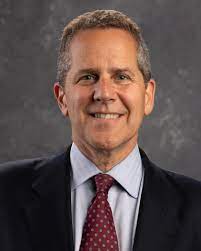 Sept. 7, 2022—The Federal Reserve’s new regulatory chief said Wednesday that the central bank is considering how to more-closely scrutinize bank mergers and may beef up the way it requires certain banks to plan for their own demise.
Read Barr’s entire remarks here “Making the Financial System Safer and Fairer”
The remarks from Fed Vice Chairman Michael Barr, his first in public since taking office July 19, suggest a more aggressive approach to overseeing Wall Street than his Republican predecessor Randal Quarles.
Mr. Barr said he aims to evaluate how the Fed reviews proposed bank tie-ups and to assess “where we can do better,” speaking at an event hosted by the Brookings Institution, a Washington think tank.
The remarks are consistent with those from others made by the Biden administration and its top regulators, who are seeking to address concerns that the steady growth of the nation’s largest regional banks has introduced new risks to the financial system. While these firms might lack the vast trading floors and international operations of megabanks such as JPMorgan Chase & Co. and Bank of America Corp., the biggest regionals’ balance sheets are now approaching the size of some of so-called systemically important banks.
The push to revamp the way regulators assess the mergers of large banks is in its early stages but could make bank tie-ups more difficult.
“These risks may be difficult to assess, but this consideration is critical to assess how we are performing merger analysis and where we can do better,” Mr. Barr said Wednesday.
The remarks were being closely watched by banks and officials to get a sense of Mr. Barr’s priorities.
He spoke about so-called living wills, or plans for banks to wind themselves down in a crisis without a government bailout. Mr. Barr said regulators need to continue to analyze whether firms are taking “all appropriate steps to limit the costs to society of their potential failure.” He also warned about the so-called resolvability of some larger regional banks that have grown in size and in importance to the financial system.
Mr. Barr’s remarks didn’t go into detail on whether he plans to alter bank capital and liquidity levels through changes to the central bank’s rulebook or its annual “stress tests,” which aim to determine how large lenders would react to drastic market and economic shock.
Still, he suggested he was looking at ways to beef up stress tests, the value of which some critics say has eroded over time, becoming less stressful for banks. “The stress tests need to continue to evolve,” Mr. Barr said. “They’re supposed to be stressful. They’re supposed to be tough. And I want to make sure that they are that way.”
He said he would have more to say about certain bank-capital requirements in the fall. Mr. Barr has previously said he wants to get a broad view of requirements before pushing for adjustments to rules piece by piece.
Industry groups, such as the Bank Policy Institute and the Financial Services Forum, had no immediate comment on Mr. Barr’s remarks.
Mr. Barr’s supervision role is the government’s most influential bank overseer, responsible for developing a vision for the regulation of big banks and other financial firms. That includes developing policy recommendations for the Fed board and for overseeing its regulatory staff, which supervises some of the largest U.S. financial firms, including JPMorgan, Bank of America and Citigroup Inc.
Mr. Quarles, who previously held the Fed supervision post, focused on simplifying financial regulations enacted after the 2008-09 financial crisis. Supporters say those moves clarified or better calibrated the central bank’s rules. Some Democrats say they significantly softened the impact of the Wall Street rulebook. Mr. Quarles left the Fed in December.
At the event, Mr. Barr also addressed monetary policy. He said inflation was too high and that the Fed was committed to bringing it down. Acknowledging that the Fed’s rate increases risk a further slowdown to the economy—and even some pain—he said it is far worse to let “inflation continue to be too high.”
He didn’t specify how high the Fed’s benchmark interest rate should rise.
Mr. Barr was the last of President Biden’s slate of five appointees to the central bank. Fed Chairman Jerome Powell and three other appointments were confirmed in recent months.
Formerly a dean of public policy at the University of Michigan, Mr. Barr also served in the Treasury Department during the Clinton and Obama administrations, including as a top lieutenant to then-Treasury Secretary Timothy Geithner. Mr. Barr played a role as an architect of the 2010 Dodd-Frank financial overhaul, including the law’s creation of the Consumer Financial Protection Bureau.
Courtesy Andrew Ackerman, Wall Street Journal
Jun 23, 2022 — Cornerstone and HCUA merger committees have begun the due diligence process.
The Cornerstone League and Heartland Credit Union Association are exploring the possibility of a merger. Both league boards approved moving forward with the due diligence process, and a letter of intent has been signed by both organizations. A merger between the two would create a five-state league serving up to 718 credit unions and 14 million members, led by Cornerstone League President/CEO Caroline Willard.
“We believe that the infrastructure supporting our credit unions must evolve to keep pace with the way credit unions and consumers have changed,” said Willard. “Partnering with Heartland can help both organizations do that.”
“Joining HCUA and Cornerstone together provides a unique opportunity for our leagues to maximize efforts in compliance and advocacy,” said Lisa Simmons, interim CEO at the Heartland Credit Union Association. “This partnership will provide all credit unions access to more options to better serve their members and communities.”
Willard said that in combining their shared strengths, Cornerstone and HCUA can help to preserve the unique role of financial cooperatives in the marketplace.
“By removing barriers on the federal, state, and local level, we can fight regulatory burdens more effectively and strengthen our influence as a larger regional league,” she said.
Cornerstone League Board Chairman James Boyd said that Cornerstone’s proven multi-state association model can be applied to create additional value in the Heartland region.
“We at Cornerstone are excited at the possibility of expanding our model—centralized professional staffing combined with boots on the ground in each state capital—into Kansas and Missouri,” said Boyd, who is also president/CEO of Abilene Teachers Federal Credit Union in Abilene, Texas. “Given the political and cultural similarities amongst our five states, we believe the combination can be smooth and productive.”
James Nastars, board chairman of the Heartland Credit Union Association and president/CEO of Meritrust Credit Union in Wichita, Kan., said the time is right to consider a merger.
“Our two associations complement each other in so many ways, and our focus and commitment to credit unions align very well,” he said. “By working together while still maintaining our individual state identities, it will create an even stronger league and provide our credit unions of all sizes with more opportunities to grow.”
Upon consolidation, both organizations would operate under the Cornerstone League brand, serving credit unions in Arkansas, Kansas, Missouri, Oklahoma, and Texas.
Following the due diligence process, the boards of both associations would need to vote on the approval of a merger agreement, and a vote of the members of both organizations would be required as well. In the meantime, members of both leagues will be invited to one of many townhall meetings to learn more about the consolidation, provide feedback, and ask questions. If the merger is approved, the tentative timeline for the merger to become official is Jan. 1, 2023.
Author: Cornerstone League
Courtesy of Ray Birch, CUToday.info
The group opposing the merger of the $1.088-billion Vermont State Employees Credit Union—including its former CEO–with $1.94-billion New England FCU remains committed to blocking the deal, and their position has not changed following VSECU’s recent annual meeting, which one person called “member unfriendly.”
That former VSECU CEO, Steven Post, who is leading the effort to convince members to vote no on the combination later this year, told CUToday.info the annual meeting at the close of March only strengthened the group’s position.
“It was probably the most member unfriendly annual meeting I’ve ever been to,” said Post, who watched the virtual event with 150 other members. “The board chair announced at the beginning they would only entertain 30 minutes of discussion on the merger—the most consequential decision of the institution’s life. And, they proceeded have a lot of technology challenges for people to overcome in order to participate.”
But VSECU CEO Rob Miller told CUToday.info the meeting’s merger discussions, and the deal itself, have not been rushed, and that the two-hour annual meeting dedicated appropriate time to merger conversations, including questions from members.
‘Calling All Members’

As CUToday.info reported, Post and two former board members of the CU are expressing opposition to VSECU’s plan to merge with NEFCU, and have created a website (www.callingallmembers.org) urging others to help stop the merger. The deal still requires approval from NCUA, which is expected to take three to five months. Pending all the necessary approvals, the newly unified credit union, which would be the largest in the state, could begin operating in early 2023, the credit unions said.
Text on the website seeks to make VSECU members aware of how mergers work in credit unions.
“Has the merger already happened?,” reads one headline. “NO! The merger has not taken place,” the text on the website continues. “Yes, the email that was sent to members with its subject line ‘We are merging with New England Federal Credit Union’ was designed to make members think the merger was sure to happen. Many members believe that the proposed merger has already been approved with just a vote of the Board of Directors.
“Members must vote, too!” reads another headline. “You would have had to read ¾ of the way through the notice before learning that the proposed merger requires the approval of VSECU members, not just the Directors,” the text continues.
Group Takes to the Media
In a joint letter published on VTDigger.com, Post, former board chair M. Jerome Diamond, and former board chair Kimberly B. Cheney, wrote that even as this year VSECU celebrates its 75th anniversary this year, its current CEO and board have decided to “merge VSECU out of existence.”
In addition to what the group has stated and posted online against the merger, Post, during an interview with CUToday.info, alleged that VSECU’s leaders—Miller and attending board members—said little during the annual meeting that expanded on the credit union’s original reasons for going through with the merger, which Post asserts really just comes down to “bigger is better.”
“During the meeting they still put forth their basic advertising that bigger is better and that members would experience a better credit union than they have today,” said Post. “But if you look at everything around what the credit union has today, and how they feel about themselves, it’s a pretty good and extraordinary credit union.”
According to its call report, VSECU reported net income of $13.1 million and capital of 8.96% at year-end 2021. New England FCU is based in Willison, Vt. and reported $28.1 million in net income, with capital of 11.9%. The CUs are the two largest in the Green Mountain State and combined would have approximately 167,000 members.
Post estimated 30 minutes were dedicated to merger discussions during the annual meeting and that 15 questions were asked, some of which Post alleged were “softballs,” questions he believes the credit union asked members to read.

Concern Over Speed of Deal
What is also concerning the group opposing the merger is how quickly the deal has been assembled.
Post said he learned that discussions about the merger between the two organizations started in October of last year.
“So, in a matter of months they went from initial discussion to final agreement. And, they are moving toward a member vote, apparently, without hiring any independent third-party consultant or advisor to work directly with the board.”
In short, Post alleged the merger has happened “very fast, behind closed doors and without any other input than from the CEO (Miller), as far as we can tell.”
Post said the annual meeting only reinforced his group’s thinking that the merger should not be allowed to happen.
 “We (former leadership team and board of directors) worked very hard to build a strong Vermont credit union designed for Vermonters,” said Post, alleging the deal moves the credit union away from its original mission. “This credit union was custom-made for our field of membership. Plus, we already had the scale to compete. We might not have had the scale to compete with Chase, but this combination does not bring that kind of scale.”
Post reiterated that VSECU is strong and that no merger is needed.
“We’re a strong, healthy credit union in this marketplace and are perfectly capable of continuing on our own,” said Post. “If the current leadership doesn’t want to do that, well, I don’t know who’s gaining from this.”
‘Best Interests of Members’
In speaking with CUToday.info, Miller emphasized members will benefit from the comination.
“This merger is in the best interests of our members and it’s an investment in the state of Vermont and its residents,” Miller said. “It will provide our current members with tremendous benefits, and they will have access to more products and services. They will have access to eight new branch locations without us having to build them. We’re going to have better loan and deposit rates, because we will choose the best between both of our organizations. Members will save money on fees.”
Miller said that greater size will be a benefit, as well.
“In the long run pulling our resources together allows us greater financial strength and resiliency,” he said. “When you bring two large balance sheets together you’re going to achieve scale and you’ll also gain greater diversity in the balance sheets that strengthens the credit union.”
Plenty of Time Allowed
Miller challenged Post’s allegation that the merger has been rushed and the deal has not fully discussed and vetted.
“We did start in October with our initial discussions, but our board has been engaged in strategic discussions all last year and actually culminated with a retreat in September. So, they’re well aware of the strategic considerations,” Miller explained. “They were having strategic discussions as to what direction we were going.”
Regarding allegations the merger decision was made by a very small group of people, Miller said, “Our board is elected by the membership to make decisions based on the best interest of our members. They consulted with me. They consulted with our management team. They consulted with an independent consultant. They did their due diligence.”
When asked by CUToday.info to provide the name of the consulting group VSECU used, Miller responded, “We have and will continue to engage a number of consultants and industry experts through the process. We meet and consult with those experts frequently.”
No Financial Incentives
Miller, who will continue on as president/COO with the new credit union—the name of which has yet to be determined—said a salary increase for his role has not been addressed.
New England FCU CEO John Dwyer will be CEO of the new organization if it is completed.
“I have no guarantees…My salary is going be managed as it is today, on a market-rated basis based on comps and other things,” Miller said. “There’s no promise or agreement for my salary to go up or down.”
Miller stressed there are no benefits to himself or the VSECU executive team from the deal.
“There will be no merger-related financial arrangements. If there were we would have to disclose them in our application to NCUA. And I can tell you there will not be, and that’s not what this is about,” said Miller. “This merger is about providing greater value and greater services to our members, to our employees and to all Vermonters.”
Miller said there will be no merger-related distribution of excess net worth to members, “since this is a merger of equals.”
Positive Feedback from Members
Miller said members have been receptive to the merger based on interactions he and the credit union have had with them, and that during the annual meeting questions were asked and an appropriate amount of time was dedicated to merger discussions.
“The meeting lasted for nearly two hours. We allocated 30 minutes for questions specific to the merger,” explained Miller.
Miller said members who had questions that time did not allow to be addressed were told they could send them to the credit union and they will be answered on the CU’s website at a later date.
“This was our annual meeting, not a meeting that was held for the purpose of debating or discussing the merger,” added Miller. “But, given the timing of the announcement of the merger, we wanted to make time for that.”
‘Independence is Better’
The group’s website (www.callingallmembers.org) not only strongly opposes the merger but also addresses current VSECU leadership.
“We believe independence is better than a merger – much better,” the website states. “VSECU is perfectly capable of being present for at least another 75 years, and it should be. The problem we have, and it’s a big one, is that VSECU does not have the leadership needed to assure it is a prominent provider of cooperative financial services in Vermont, for Vermonters. In fact, as confirmed by this merger proposal, our credit union does not have the leadership that will choose to keep VSECU in existence at all. How can this be?”
“As members, we have a lot of work to do to preserve the vision of VSECU as a credit union for Vermont and all Vermonters. We are here to coordinate the work it will take to defeat this merger and over time to put dedicated leadership in place at our credit union,” text on the website continues. “We are calling on all members to make change simply by voting. Join us in the effort to preserve VSECU; first by defeating this merger proposal and then by helping to elect and hire new leadership.”
Unfounded Allegations
Miller said those allegations made on the site are unfounded.
“I’m very proud of the performance of this organization in the time that I’ve been here,” Miller said. “But it’s not just me, it’s all the people. So, when you call for a change in leadership because you don’t think the credit union is headed in the right direction, it’s not just me that you’re pointing fingers at. It’s everyone who works here. It’s just wrong. I will hold our performance up against anyone else. We have done well financially. We have done well in the community. In fact, some of the information (the group opposing the merger) put on their website acknowledges VSECU is a vital part of our community and it shouldn’t go away. Well, it can’t be both. We can’t be a real really vital part of our community and also have poor leadership and management at the same time.”
Miller said VSECU will be communicating with members before the vote, which is expected to take place in the Fall.
“We want to make sure they are as informed as they can be and we’re confident they’re going to see the value in the merger,” he said.
‘Defeating This Merger’
Former CEO Steven Post disagrees.
“We’re getting members more engaged and aware of this merger. I think the more we’re able to do that, the more support will gain and have a better chance of defeating this at this merger when it comes to vote,” Post said.