The Federal Reserve Board (FRB) on Friday published the results from their review of the supervision and regulation of Silicon Valley Bank, led by Vice Chair for Supervision Michael S. Barr.
 The review finds four key takeaways on the causes of the bank’s failure:
- Silicon Valley Bank’s board of directors and management failed to manage their risks;
- Federal Reserve supervisors did not fully appreciate the extent of the vulnerabilities as Silicon Valley Bank grew in size and complexity;
- When supervisors did identify vulnerabilities, they did not take sufficient steps to ensure that Silicon Valley Bank fixed those problems quickly enough; and
- The Board’s tailoring approach in response to the Economic Growth, Regulatory Relief, and Consumer Protection Act and a shift in the stance of supervisory policy impeded effective supervision by reducing standards, increasing complexity, and promoting a less assertive supervisory approach.
The FRB review also indicates the SVB failure was impacted by:
- The speed of the run due to the impact of social media;
- The creation of systemic impact on the industry, not due to size, but instead the connection of SVB to other financial counterparties and
- The relatively weak capital position of SVB
- Click here for the Fed’s press release on the report
- Click here to access the Fed’s 118-page report
 Additionally, the FDIC issued its own report on the failure of Signature Bank.
- The report noted the root cause of the failure was poor management and its pursuit of rapid, unrestrained growth without appropriate risk management practices and controls.
- Further, the report indicates FDIC’s supervision was not escalated as quickly as it should have been and the examination work product was not as timely in its processing and communication with Signature Bank management to be as effective as it could have been. These delays, the report indicates, were the result of resource challenges with examination staff.
- Click here to read the FDIC press release.
- Click here to access the FDIC’s 63-page report.
NASCUS will provide a more detailed review of this information in the days ahead.
Courtesy of By Nick Timiraos, Wall Street Journal
Stubbornly high inflation and tight labor markets led Federal Reserve officials to signal they could raise interest rates at their next meeting despite a greater likelihood of a recession later this year.
The fallout from the failures of two midsize banks led Fed officials to consider skipping a rate increase at their meeting last month, but they concluded regulators had calmed stresses enough to justify a quarter-point rate rise, according to minutes of the March 21-22 gathering released Wednesday.
For the first time since officials began lifting rates a year ago, the Fed staff forecast presented at the meeting anticipated a recession would start later this year due to banking-sector turmoil, the minutes said. Previously, the staff had judged a recession was roughly as likely to occur as not this year.
Looking ahead, the minutes hinted at potential policy divisions, with some officials pointing to greater risks of a sharper-than-anticipated slowdown and others highlighting the prospect of firmer inflation this year.
Officials concluded that given the strength of price pressures and the demand for labor, “they anticipated that some additional policy firming may be appropriate” to bring inflation down to the central bank’s 2% goal, the minutes said. They also said they would pay close attention to bank lending conditions as they weigh their next move.
The latest rate rise brought the Fed’s benchmark federal-funds rate to a range between 4.75% and 5%. All 18 officials who participated in last month’s meeting supported the increase, the minutes said. New economic projections released then showed nearly all expected they would lift rates one more time this year. Most of them expected to hold rates steady after that, provided the economy grows little this year and labor demand cools.
Over the past year, the Fed has raised rates at its fastest pace since the early 1980s to combat inflation that jumped to a 40-year high last year. Until recently, officials had signaled that they were likely to keep raising lifting rates until they saw more conclusive evidence that economic activity and price increases were slowing.
The rate outlook became much more uncertain after banking-system stresses flared last month, beginning March 9 when panicked depositors pulled money from Silicon Valley Bank, which regulators closed the following day. Regulators closed a second institution that also faced a run, Signature Bank, on March 12 and intervened aggressively to shore up confidence in the banking system.
Many Fed officials anticipated “there would be some tightening of credit conditions, and that would really have the same effects as our policies do,” Fed Chair Jerome Powell said at a news conference March 22. “If that did not turn out to be the case, in principle, you would need more rate hikes.”
Inflation moderated somewhat last month, the Labor Department said Wednesday. The consumer-price index rose 0.1% in March and by 5% over the previous 12 months, the smallest annual increase in nearly two years. But core prices, which exclude volatile food and energy items and which central bankers see as a better gauge of underlying inflation, rose 0.4% in March and by 5.6% over the previous year, up from 5.5% in February.
The Fed fights inflation by slowing the economy through raising rates, which causes tighter financial conditions such as higher borrowing costs, lower stock prices and a stronger dollar, which curb demand.
“While the full impact of this policy tightening is still making its way through the system, the strength of the economy and the elevated readings on inflation suggest that there is more work to do,” San Francisco Fed President Mary Daly said in a speech Wednesday.
The question ahead of the Fed’s May 2-3 meeting is whether officials place more emphasis on anecdotes and surveys of credit conditions if they signal a pullback in lending, which could call for forgoing an increase or raising rates while signaling a pause, or whether they place more weight on economic data that might show less effect on credit availability but be more dated.
Philadelphia Fed President Patrick Harker said Tuesday he has long anticipated the central bank would need to raise the fed-funds rate above 5% “and then sit there for a while.”
Last year, supply-chain healing offered a compelling reason to think price growth would slow. This year, the case for inflation falling depends more squarely on declines in the demand for labor and consumer spending. “If you don’t see demand moving [down], it is hard to envision how you think inflation is going to” slow, Richmond Fed President Tom Barkin told reporters on March 30.
“You have to have a theory of why inflation’s going to come down if you think it is going to come down,” he said.
The Federal Reserve Board on Friday adopted a final rule that implements the Adjustable Interest Rate (LIBOR) Act by identifying benchmark rates based on SOFR (Secured Overnight Financing Rate) that will replace LIBOR in certain financial contracts after June 30, 2023. The final rule is substantially similar to the proposal with certain clarifying changes made in response to comments.
LIBOR, formerly known as the London Interbank Offered Rate, was the dominant benchmark rate used in financial contracts for decades. However, it was fragile and subject to manipulation, and U.S. dollar LIBOR panels will end after June 30, 2023.
Congress enacted the LIBOR Act to provide a uniform, nationwide solution for so-called tough legacy contracts that do not have clear and practicable provisions for replacing LIBOR after June 30, 2023. As required by the law, the final rule identifies replacement benchmark rates based on SOFR to replace overnight, one-month, three-month, six-month, and 12-month LIBOR in contracts subject to the Act. These contracts include U.S. contracts that do not mature before LIBOR ends and that lack adequate “fallback” provisions that would replace LIBOR with a practicable replacement benchmark rate.
In response to comments, the final rule restates safe harbor protections contained in the LIBOR Act for selection or use of the replacement benchmark rate selected by the Board, and clarifies who would be considered a “determining person” able to choose to use the replacement benchmark rate selected by the Board for use for certain LIBOR contracts. Consistent with the LIBOR Act, the final rule also ensures that LIBOR contracts adopting a benchmark rate selected by the Board will not be interrupted or terminated following LIBOR’s replacement.
The final rule will be effective 30 days after publication in the Federal Register.
October 13, 2022 — The Federal Reserve Board and the Consumer Financial Protection Bureau today announced the dollar thresholds used to determine whether certain consumer credit and lease transactions in 2023 are exempt from Regulation Z (Truth in Lending) and Regulation M (Consumer Leasing).
By law, the agencies are required to adjust the thresholds annually based on the annual percentage increase in the Consumer Price Index for Urban Wage Earners and Clerical Workers, known as CPI-W. Transactions at or below the thresholds are subject to the protections of the regulations.
Specifically, based on the annual percentage increase in the CPI-W as of June 1, 2022, Regulation Z and Regulation M generally will apply to consumer credit transactions and consumer leases of $66,400 or less in 2023. However, private education loans and loans secured by real property, such as mortgages, are subject to Regulation Z regardless of the amount of the loan.
Read the Consumer Leasing (Regulation M).
Read the Truth in Lending (Regulation Z).
Questions for the Federal Reserve Board can be directed to Laura Benedict at [email protected] or (202) 452-2955.
 Research by Boston Fed economist finds borrowers and lenders incentivized to take more risk
September 15, 2022 — In 2010, researcher Mattia Landoni obtained access to data on thousands of short-term loans known as “repos” that were issued in the three years before the 2007-2008 financial crisis. But like many of his colleagues, Landoni assumed that data on repos would be boring since they were generally thought of as safe. He did not take a closer look at it until 2014, at the urging of fellow researcher Jun Kyung Auh.
He quickly realized he was wrong: Repos were not boring. In fact, the lack of transparency into how they are made or how lenders manage risk has implications that could impact the economy’s fragility, said Landoni, now a senior financial economist at the Federal Reserve Bank of Boston.
“We need to understand what we are seeing here, or we could be just as blindsided by the next financial crisis as we were in 2007,” said Landoni, who works in the Bank’s Supervision, Regulation & Credit department.
Landoni and Auh teamed up on a paper that examines risk-taking associated with repos, “Loan Terms and Collateral: Evidence from the Bilateral Repo Market,” which is forthcoming in The Journal of Finance. The researchers find that repo loans against low-quality collateral are riskier than those against high-quality collateral. But they also find that there are incentives for both lenders and borrowers to continue engaging in these riskier loans.
The researchers said lenders appear to take more risk and receive more compensation when collateral quality is lower, and loans against low-quality collateral are cheaper for borrowers.
Quality, transparency of securities used as collateral varies widely
“Repo” is short for “repurchase agreement,” a short-term, collateral-backed loan. A “bilateral” repo is between two parties. The firm acting as the borrower agrees to sell securities – such as stocks and bonds – to another firm, and then repurchase those same securities at a higher price. The securities act as collateral, meaning the buyer keeps them if the seller breaks the agreement.
But the quality of the collateral varies widely. The researchers observed two main types of securities used as collateral: mortgage-backed securities and collateralized debt obligations.
Landoni said mortgage-backed securities have some degree of transparency because they are backed by real estate loans.
“You can list each mortgage by zip code, so you know exactly what is going into that (security),” he said.
Collateralized debt obligations are backed by a pool of loans and assets, and are, in theory, no more or less risky than mortgage-backed securities. But the researchers found that they are less transparent and more complex, making it harder to assess their value. And, Landoni said, “They were of lower quality, on average.”
Paper: Loans against lower-quality collateral are riskier, but attractive
For their paper, Landoni and Auh created a dataset of more than 13,000 “uncleared” repo loans – meaning they were made directly between two parties. The loans were made between a large hedge fund and major financial institutions from 2004-2007.
The length of the loans spanned one day to six months, and their principal amounts ranged from about $30,000 to more than $700 million, with a median of about $10.5 million.
The researchers analyzed the data and studied the prices of securities being used as collateral. They also created a model to determine what was causing patterns they observed in the dataset.
They found that, despite their higher margins, repo loans against lower-quality collateral were riskier than loans against higher-quality collateral. But both lenders and borrowers had incentives to engage in these riskier loans.
Why? The researchers said it relates to lender optimism and a behavior called “reaching for yield:” Lenders offer a relatively cheaper loan to a borrower with lower-quality collateral in exchange for the chance to take more risk and potentially earn more money.
Since borrowers can get cheaper loans using low-quality collateral, they have an incentive to continue buying it. And that gives the firms that produce securities used as low-quality collateral an incentive to keep creating them.
The researchers said it is critical to continue learning more about this market as the risks lenders take there could have significant impacts on the overall economy.
Landoni said efforts are ongoing to gather more information about the bilateral repo market. He added that he hopes the study helps inform a pilot program in the U.S. Treasury’s Office of Financial Research that is focused on establishing data collection and disclosure protocols.

Courtesy of Amanda Blanco, Federal Reserve Bank of Boston
The main findings from the August 2022 Survey are:
Inflation
- Median one- and three-year-ahead inflation expectations continued their steep declines in August: the one-year measure fell to 5.7% from 6.2% in July, while the three-year measure fell to 2.8% from 3.2%. The survey’s measure of disagreement across respondents (the difference between the 75th and 25th percentile of inflation expectations) increased to a new series high at the one-year horizon but decreased at the three-year horizon.
- Median five-year-ahead inflation expectations, which have been elicited in the monthly SCE core survey on an ad-hoc basis since the beginning of this year and were first published in July 2022, also declined to 2.0% from 2.3%. Disagreement across respondents in their five-year-ahead inflation expectations also declined in August.
- Median inflation uncertainty—or the uncertainty expressed regarding future inflation outcomes—decreased at the short-term horizon and was unchanged at the medium-term horizon.
- Median home price expectations declined sharply by 1.4 percentage points to 2.1%, its lowest reading since July 2020, and falling below pre-pandemic levels. The decline was broad based across demographic groups and geographic regions. Home price expectations have now fallen by nearly two-thirds since the April 2022 reading of 6.0%.
- Expectations about year-ahead price changes fell by 1.4 percentage points for gas (to 0.1%), 0.8 percentage point for food (to 5.8%), and 0.3 percentage point for rent (to 9.6%). The median expected change in the cost of medical care rose by 0.1 percentage point (to 9.3%) and was unchanged for college education at 8.4%.
Labor Market
- Median one-year-ahead expected earnings growth remained unchanged at 3.0% in August for the eighth consecutive month.
- Mean unemployment expectations—or the mean probability that the U.S. unemployment rate will be higher one year from now—decreased by 0.2 percentage point to 40.0%.
- The mean perceived probability of losing one’s job in the next 12 months decreased by 0.7 percentage point to 11.1%. Similarly, the mean probability of leaving one’s job voluntarily in the next 12 months decreased by 0.9 percentage point to 18.5%, its lowest reading since March 2021.
- The mean perceived probability of finding a job (if one’s current job was lost) increased to 57.2% from 55.9% in July. The increase was most pronounced for those with a high-school education or less.
Household Finance
- The median expected growth in household income increased by 0.1 percentage point to 3.5% in August, a new series high.
- Median household spending growth expectations increased by 1.0 percentage point to 7.8%. The increase was driven by those with a high-school degree or less.
- Perceptions of credit access compared to a year ago deteriorated, with the share of households reporting it is harder to obtain credit than one year ago increasing to a new series high. Similarly, expectations for future credit availability also deteriorated, with the share of respondents expecting it will be harder to obtain credit in the year ahead increasing to a new series high.
- The average perceived probability of missing a minimum debt payment over the next three months increased by 1.4 percentage points to 12.2%, its highest reading since May 2020. This increase was broad based across demographic groups.
- The median expectation regarding a year-ahead change in taxes (at current income level) decreased by 0.3 percentage point to 4.5%.
- Median year-ahead expected growth in government debt decreased by 0.2 percentage point to 10.4%, its lowest reading since November 2020.
- The mean perceived probability that the average interest rate on saving accounts will be higher in 12 months was unchanged in August.
- Perceptions about households’ current financial situations compared to a year ago improved with fewer households reporting a worse situation compared to a year. Year-ahead expectations about households’ financial situations also improved, with fewer households expecting to be worse off a year from now.
- The mean perceived probability that U.S. stock prices will be higher 12 months from now increased by 2.1 percentage points to 36.4%.
About the Survey of Consumer Expectations (SCE)
The SCE contains information about how consumers expect overall inflation and prices for food, gas, housing, and education to behave. It also provides insight into Americans’ views about job prospects and earnings growth and their expectations about future spending and access to credit. The SCE also provides measures of uncertainty regarding consumers’ outlooks. Expectations are also available by age, geography, income, education, and numeracy.
The SCE is a nationally representative, internet-based survey of a rotating panel of approximately 1,300 household heads. Respondents participate in the panel for up to 12 months, with a roughly equal number rotating in and out of the panel each month. Unlike comparable surveys based on repeated cross-sections with a different set of respondents in each wave, this panel allows us to observe the changes in expectations and behavior of the same individuals over time. For further information on the SCE, please refer to an overview of the survey methodology here, the interactive chart guide, and the survey questionnaire.
Federal Reserve’s Michael Barr highlights priorities in initial public remarks
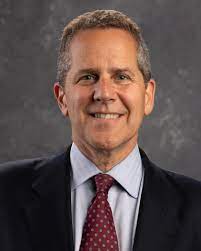 Sept. 7, 2022—The Federal Reserve’s new regulatory chief said Wednesday that the central bank is considering how to more-closely scrutinize bank mergers and may beef up the way it requires certain banks to plan for their own demise.
Read Barr’s entire remarks here “Making the Financial System Safer and Fairer”
The remarks from Fed Vice Chairman Michael Barr, his first in public since taking office July 19, suggest a more aggressive approach to overseeing Wall Street than his Republican predecessor Randal Quarles.
Mr. Barr said he aims to evaluate how the Fed reviews proposed bank tie-ups and to assess “where we can do better,” speaking at an event hosted by the Brookings Institution, a Washington think tank.
The remarks are consistent with those from others made by the Biden administration and its top regulators, who are seeking to address concerns that the steady growth of the nation’s largest regional banks has introduced new risks to the financial system. While these firms might lack the vast trading floors and international operations of megabanks such as JPMorgan Chase & Co. and Bank of America Corp., the biggest regionals’ balance sheets are now approaching the size of some of so-called systemically important banks.
The push to revamp the way regulators assess the mergers of large banks is in its early stages but could make bank tie-ups more difficult.
“These risks may be difficult to assess, but this consideration is critical to assess how we are performing merger analysis and where we can do better,” Mr. Barr said Wednesday.
The remarks were being closely watched by banks and officials to get a sense of Mr. Barr’s priorities.
He spoke about so-called living wills, or plans for banks to wind themselves down in a crisis without a government bailout. Mr. Barr said regulators need to continue to analyze whether firms are taking “all appropriate steps to limit the costs to society of their potential failure.” He also warned about the so-called resolvability of some larger regional banks that have grown in size and in importance to the financial system.
Mr. Barr’s remarks didn’t go into detail on whether he plans to alter bank capital and liquidity levels through changes to the central bank’s rulebook or its annual “stress tests,” which aim to determine how large lenders would react to drastic market and economic shock.
Still, he suggested he was looking at ways to beef up stress tests, the value of which some critics say has eroded over time, becoming less stressful for banks. “The stress tests need to continue to evolve,” Mr. Barr said. “They’re supposed to be stressful. They’re supposed to be tough. And I want to make sure that they are that way.”
He said he would have more to say about certain bank-capital requirements in the fall. Mr. Barr has previously said he wants to get a broad view of requirements before pushing for adjustments to rules piece by piece.
Industry groups, such as the Bank Policy Institute and the Financial Services Forum, had no immediate comment on Mr. Barr’s remarks.
Mr. Barr’s supervision role is the government’s most influential bank overseer, responsible for developing a vision for the regulation of big banks and other financial firms. That includes developing policy recommendations for the Fed board and for overseeing its regulatory staff, which supervises some of the largest U.S. financial firms, including JPMorgan, Bank of America and Citigroup Inc.
Mr. Quarles, who previously held the Fed supervision post, focused on simplifying financial regulations enacted after the 2008-09 financial crisis. Supporters say those moves clarified or better calibrated the central bank’s rules. Some Democrats say they significantly softened the impact of the Wall Street rulebook. Mr. Quarles left the Fed in December.
At the event, Mr. Barr also addressed monetary policy. He said inflation was too high and that the Fed was committed to bringing it down. Acknowledging that the Fed’s rate increases risk a further slowdown to the economy—and even some pain—he said it is far worse to let “inflation continue to be too high.”
He didn’t specify how high the Fed’s benchmark interest rate should rise.
Mr. Barr was the last of President Biden’s slate of five appointees to the central bank. Fed Chairman Jerome Powell and three other appointments were confirmed in recent months.
Formerly a dean of public policy at the University of Michigan, Mr. Barr also served in the Treasury Department during the Clinton and Obama administrations, including as a top lieutenant to then-Treasury Secretary Timothy Geithner. Mr. Barr played a role as an architect of the 2010 Dodd-Frank financial overhaul, including the law’s creation of the Consumer Financial Protection Bureau.
Courtesy Andrew Ackerman, Wall Street Journal
sCourtesy of Colby Smith, Financial Times
Minutes from June meeting suggest even tighter monetary policy may be needed from US central bank.
Top Federal Reserve officials think entrenched inflation is a “significant risk” to the US economy and fear tighter monetary policy will be needed if price growth exceeds their expectations, according to an account of their most recent meeting. The minutes of the US central bank’s June meeting, when the Fed delivered the first 0.75 percentage point rate rise since 1994, also showed that policymakers now support raising interest rates to the point at which economic activity is restrained, with the possibility that they could become “even more restrictive” if warranted by the data.
“Many participants judged that a significant risk now facing the committee was that elevated inflation could become entrenched if the public began to question the resolve of the committee to adjust the stance of policy as warranted,” the minutes said.
The notes from the Federal Open Market Committee, which were released on Wednesday, revealed the alarm spreading through the top ranks of the US central bank over inflation, which is running at an annual pace of 8.6 percent. The account also showed the lengths officials were willing to go to ensure prices do not spiral also showed the lengths officials were willing to go to ensure prices do not spiral further out of control.
The Fed will decide whether to raise rates by 0.50 percentage points or 0.75 percentage points at its meeting this month, although several officials have indicated their support for the larger increase.
“If inflation becomes entrenched in consumer and business psyches, it will be much more difficult to lower it over the medium term,” said Kathy Bostjancic, chief US economist at Oxford Economics. “That is the breaking point for [the Fed], and they really want to do their best to ensure that it doesn’t happen.”
She added: “The longer inflation remains high, the more it will become embedded in expectations.”The minutes showed that participants were increasingly aware that their plans to tighten monetary policy would slow the pace of economic growth. Most noted that the risks to the outlook were “skewed to the downside” given the possibility that further tightening could weigh on activity.
The minutes echoed recent comments from Fed chair Jay Powell, who has emphasized that the central bank has little room for maneuver as it tries to tame inflation without causing widespread job losses.
A US recession is now “certainly a possibility”, and would in large part depend on factors outside of the Fed’s control, he said last month, pointing to the war in Ukraine and prolonged Covid-19 lockdowns in China.
Powell reiterated that message last week on a panel with other central bankers, when he warned that a failure to restore price stability would lead to an even worse outcome for the US economy.
Click here to read the entire article.