August 14, 2023 — The Federal Deposit Insurance Corporation (FDIC) today published its 2023 Risk Review. The report summarizes conditions in the U.S. economy, financial markets, and banking industry.
The 2023 Risk Review provides a comprehensive summary of key developments and risks in the U.S. banking system, as in prior reports, and includes a new section focused on crypto-asset risk. The report focuses on the effects of key risks on community banks in particular, as the FDIC is the primary federal regulator for the majority of community banks in the U.S. banking system.
The FDIC’s Risk Review is an annual publication and based on year-end banking data from the prior year. This year’s expanded report incorporates data and insights related to the recent stress to the banking sector through first quarter 2023. FDIC intends to publish its next Risk Review in the spring of 2024.
FDIC: PR-61-2023
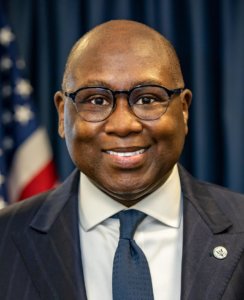 August 15, 2023 — As NCUA board member Rodney Hood’s term comes to a close this month, and with a Democrat expected to take his place, eyes turn to the Biden Administration for news of who that individual might be, though no successor has been named.
Hood served as NCUA Chairman under Trump in 2019 and then as an NCUA board member in 2021 when Todd Harper took over the Chairman position after nomination from President Biden. He also served on the board previously under President George W. Bush from 2005-2009.
Hood acknowledged the end of his term on the NCUA board back in July, remarking on his motivations for joining the board originally and his desire to further the credit union goal of “people helping people.”
“I hope that I have lived up to that commitment by demonstrating a fidelity to the tenets of safety and soundness while also striving to provide access to financial inclusion for the nearly 135 million members of our country’s credit union system,” said Hood. “In the coming weeks, I will begin another season in my life as my term on the NCUA board concludes in August. I would like to thank Lenwood Brooks and Hallie Williams Hailey in Chattanooga for all their hard work and support in my role as Chairman and board member.”
However, despite these remarks, Hood will remain on the NCUA board for the foreseeable future, as the Biden Administration has yet to name a successor. Furthermore, even if one were to be named tomorrow, it could take months for said successor to be confirmed by the Senate.
Hood, for example, was nominated in January 2019, but was not confirmed until March 2019 and was not sworn in until April 2019.
In light of this, Hood has expressed his willingness and intention to remain on the NCUA board in the coming months until his replacement is sworn in. This move is not out of the ordinary, though it is impossible to say how long Hood could unofficially “extend” his term through. Democrat Debbie Matz, for example, served for over a year after her term expired in 2016.
While this may seem inconsequential, considering Hood has already served for several years with the NCUA, it could have ramifications for key NCUA decisions in the upcoming months. Hood ensures a Republican majority on the board, as fellow board member Kyle Hauptman is also a Republican whereas Board Chairman Todd Harper is a Democrat.
Since the beginning of Harper’s term in 2021, he has worked to push through several proposals which have been blocked by the Republican majority. Meaning that Harper will either need to delay certain issues or risk an undesired outcome.
For instance, the NCUA recently requested information relating to climate change risk back in June. This move was led by Harper, and rejected by Hauptman, and while Hood supported the request for information, he made it clear he would not support any rulemaking or further action on it.
Though if Harper does delay decision-making while waiting for Biden to appoint another Democrat, he might have to wait a while, as the White House remains quiet on the topic.
Courtesy of Emily Claus, CUSO Magazine

Kerem Yücel | MPR News
Two well-known Minnesota credit unions are planning a merger that would make them the fourth-largest credit union in the state.
Leaders of Spire Credit Union and Hiway Credit Union said in a news release that they consider the move a “merger of equals.” But the plan involves Hiway joining Spire’s “more expansive community charter,” and Hiway members will need to approve the merger. The National Credit Union Administration has already approved the proposed merger.
The credit unions said current Spire President/CEO Dan Stoltz will become CEO of the new organization, and current Hiway President/CEO Dave Boden will become president. The combined organization will have a new name that’s yet to be determined.
“We’re proud to bring together two already strong credit unions for the betterment of all involved: our members, our people and our communities,” Boden said in a news release.
“With the expanded branch network, and to meet the needs of a larger organization, we’re excited to be able to offer potential new opportunities to our people,” Stoltz said in the release.
Spire and Hiway are currently the fifth- and sixth-largest credit unions in Minnesota, each with about $2 billion in assets.
Hiway has the smaller footprint, with four branches in the Twin Cities and more than 90,000 members. It also operates four high school branches in St. Paul. Spire has 22 branches, from the Iron Range to Waseca, Minn., although most are in the Twin Cities area. Spire has more than 150,000 members.
The credit unions said all branches will remain open, and all employees retained. Information sent to Hiway members says they will retain account numbers and other key banking features.
The vote by Hiway members is set to wrap up in September. If approved, the merger would take effect Jan. 1.
Courtesy of Tim Nelson, MPRNews.org
The Consumer Financial Protection Bureau (CFPB) filed a lawsuit in federal court against auto-loan servicer USASF Servicing (USASF) for a host of illegal practices that harmed individuals with auto loans. These practices include wrongfully disabling borrowers’ vehicles, improperly repossessing vehicles, double-billing borrowers for insurance premiums, and failing to return millions of dollars in refunds to consumers. The CFPB is seeking to obtain redress for consumers and civil money penalties and stop any future violations.
“The CFPB is suing USASF for a range of misconduct, including illegally activating devices that prevented borrowers from starting their cars,” said CFPB Director Rohit Chopra. “Given the rising cost of cars during the pandemic and jump in auto loan debt across the country, the CFPB is working to root out illegal activity in this market.”
USASF is an auto-loan servicer headquartered in Lawrenceville, Georgia. USASF serviced auto loans that were originated by an affiliate, U.S. Auto Sales, Inc., which was a buy-here-pay-here auto dealer and lender with 31 dealerships in the Southeast. USASF offered both Guaranteed Asset Protection and collateral-protection insurance, which are products that consumers can buy when they buy or lease a car. In April 2023, U.S. Auto Sales wound down most of its businesses.
The CFPB alleges that USASF:
- Illegally disabled cars: Many auto lenders require that cars are installed with devices using GPS technology that allow the lender or servicer to prevent a borrower from starting a car. These devices are known as “kill switches” or “starter interrupters.” USASF incorrectly disabled vehicles at least 7,500 times and caused these devices to play warning tones in vehicles over 71,000 times during periods when the consumer was not in default or was in communication with USASF about upcoming payments. USASF remotely disabled vehicles at least 1,500 times after explicitly promising consumers it would not do so.
- Failed to refund premiums to consumers: USASF offered consumers Guaranteed Asset Protection, which covers some of the difference (or gap) between the amount a borrower owes on their auto loan and what the car insurance will pay if the vehicle is stolen, damaged, or totaled. When consumers paid off their loans early or USASF repossessed a car and charged off an account, consumers were entitled to refunds of any Guaranteed Asset Protection premiums paid in advance for periods where they would no longer have coverage. USASF failed to obtain millions of dollars in refunds from the Guaranteed Asset Protection administrator.
- Double-billed consumers and misapplied payments: When consumers were enrolled in collateral-protection coverage by a USASF affiliate, they were also charged for that same coverage by USASF. Approximately 34,000 consumers were double-charged for the insurance each billing cycle, in some cases for over a year, costing consumers millions of dollars. USASF also wrongfully applied consumers’ extra loan payments first to late fees or collateral-protection insurance instead of accrued interest. This misapplication of payments caused consumers to pay over a million dollars in interest and fees that they would not have paid if USASF had correctly applied their payments.
- Wrongfully repossessed vehicles: USASF illegally repossessed the vehicles of some consumers who never qualified for repossession or had taken action to stop the repossession. In some instances USASF sold the vehicles that it had wrongfully repossessed.
Auto loans are the third-largest category of outstanding consumer debt, after mortgages and student loans. In recent years, the cost of vehicles has risen substantially, leading to increased borrowing. The CFPB has increased its monitoring of the auto lending market, and has taken action against auto finance companies for wrongful repossessions, poor credit reporting practices, and misrepresenting the cost of credit.