Courtesy of PYMNTS.com
 The words “systemic” and “risk” have been on everyone’s lips in the past few weeks.
And for Big Tech, at least, the regulatory gaze will only widen, eyeing the payments ambitions of the biggest platforms, and whether new payment types — stablecoins among them — might scale enough on those platforms to be a cause for vigilance.
The Consumer Financial Protection Bureau (CFPB) efforts may get renewed vigor in the wake of the fact late last month federal appeals court ruled that the CFPB’s funding via the Federal Reserve is constitutional.
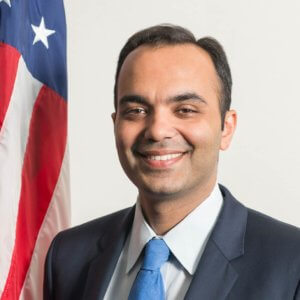
And this week, appearing on Yahoo Finance Live, CFPB Director Rohit Chopra gave some insight into the areas ripe for consideration and review — and perhaps some new regulations too.
He said the Financial Stability Oversight Council has the authority to “designate certain payment activities [including] payment clearing and settlement as either systemic or likely to become systemic.”
Among the payment methods that need to be examined, per Chopra’s commentary: stablecoins, which could conceivably start “riding the rails of a Big Tech platform or a card network.”
Who’s on the Platform and Who’s Not
“There are some questions we have,” he said of the platforms, “about how do some of these services decide to kick a merchant off or kick a user off? How are they actually using all the data that they’re collecting through our phones and through what we buy?”
He noted that beyond the ability to craft targeted ads, there may be a “move to a world with personalized pricing.”
The regulators, he said, have been looking, and will continue to look, at the cloud services offered by Big Tech players — with particular concern around the risks tied to outage or attacks by fraudsters and hackers, non-state and state actors alike. The risks extend to healthcare, energy and other sectors, he said.
“It’s hard to know what specific tools we’ll use,” he told the finance site, as to what guardrails, regulations and policies may be on the horizon.
As reported by PYMNTS in recent weeks, the drumbeat for stablecoin regulation is likely to grow louder after the stablecoin USDC briefly lost its dollar peg. USDC dipped to as low as 86 cents after the issuer of the stablecoin, Circle, said that some of the funds backing the stablecoin were held at Silicon Valley Bank.
Big Tech’s financial services roadmaps may be determined in part by open banking, where as banks share account data and other details (with consumer permission), they can offer a range of financial products. There’s also, of course, the ability for Big Tech to apply for banking licenses. Apple’s latest push into buy now, pay later (BNPL), with Apple Pay Later, is but one of the more recent examples of the lines blurring between payments, providers and platforms.
 Governor Bowman presented identical remarks to the Florida Bankers Association Leadership Luncheon Events, Tampa, Florida, on January 11, 2023.
Thank you, Bill, and I’d also like to thank Alex Sanchez and the Florida Bankers Association for the invitation to be with you today. It is a pleasure to be here in person to discuss issues that are top of mind for all of us as we begin the new year. I will start with some thoughts about the Federal Reserve’s ongoing effort to lower inflation, which continues to be much too high. I will then touch on other issues in the Fed’s purview, including bank supervision and regulation.1
While the Fed has access to a staff of expert economists and a seemingly infinite flow of economic data to inform our decision-making, I often find that the most valuable data comes directly from the experiences and perspectives of those who are engaged in and supporting the economy through the financial system. In my more than four years as a member of the Board of Governors and the Federal Open Market Committee (FOMC), I have learned that there are few who understand the economy more directly than bankers, business owners and the customers you serve.
Monetary Policy
Let me begin by discussing the Fed’s efforts to lower inflation. Inflation is much too high, and I am focused on bringing it down toward our 2 percent goal. Inflation affects everyone, but it is especially harmful to lower- and middle-income Americans, who spend a greater share of their income on necessities like food and housing. Stable prices are the bedrock of a healthy economy and are necessary to support a labor market that works for all Americans.
Over the past year, I have supported the FOMC’s policy actions to address high inflation, and I am committed to taking further actions to bring inflation back down to our goal. Since last March, the FOMC has been tightening monetary policy through a combination of increasing the federal funds rate by 4-1/4 percentage points and reducing our balance sheet holdings.
In recent months, we’ve seen a decline in some measures of inflation but we have a lot more work to do, so I expect the FOMC will continue raising interest rates to tighten monetary policy, as we stated after our December meeting.2 My views on the appropriate size of future rate increases and on the ultimate level of the federal funds rate will continue to be guided by the incoming data and its implications for the outlook for inflation and economic activity.
I will be looking for compelling signs that inflation has peaked and for more consistent indications that inflation is on a downward path, in determining both the appropriate size of future rate increases and the level at which the federal funds rate is sufficiently restrictive. I expect that once we achieve a sufficiently restrictive federal funds rate, it will need to remain at that level for some time in order to restore price stability, which will in turn help to create conditions that support a sustainably strong labor market. Maintaining a steadfast commitment to restoring price stability is essential to support a sustainably strong labor market.
To this point, unemployment has remained low as we have tightened monetary policy and made progress in lowering inflation. I take this as a hopeful sign that we can succeed in lowering inflation without a significant economic downturn. It is likely that as a part of this process, labor markets will soften somewhat before we bring inflation back to our 2 percent goal. While the effects of monetary policy tightening on the job market have generally been limited so far, slowing the economy will likely mean that job creation also slows. And if there are unforeseen shocks to the economy, growth may slow further. It’s important to keep in mind that there are costs and risks to tightening policy to lower inflation, but I see the costs and risks of allowing inflation to persist as far greater. These dynamics make the difficult decisions facing the FOMC even more challenging, but it is absolutely necessary that the Committee achieves our goal of price stability.
From the late 1960s through the mid-1980s, the U.S. economy experienced high inflation, high unemployment, and declining living standards. During that time, policymakers prematurely eased monetary policy when the economy weakened, and inflation remained high. The FOMC was forced to return to tightening monetary policy, causing a deep recession in 1981 and 1982. This is an important lesson that guides my thinking about monetary policy and my continued support for policy actions that will continue to lower inflation.
It is also important to remember that today’s inflation is a global concern. This is because some of the factors driving inflation in the United States are global, including the disruption to goods production and trade during the pandemic, the shutdown and reopening of large economies, and the more recent disruption of food and energy supplies due to conflicts abroad. Monetary policy can do very little to improve supply disruptions, but it can help bring supply and demand into better alignment.
While the path ahead looks uncertain, I am encouraged by three specific developments. The first is the ongoing strength of the labor market, which was further supported with last Friday’s jobs report. So far, the job market has remained resilient despite higher interest rates and slower growth. The second development is that the balance sheets of households have remained strong, with low debt levels. Low debt and strong balance sheets together with the strong labor market mean that consumers and businesses can continue to spend even as economic growth slows. The third point is the strength of the U.S. banking system, with high levels of capital and liquidity, due in large part to the reforms adopted after the last financial crisis.
I will turn now to the banking and payments issues on the Fed’s agenda, which include crypto and digital assets, innovation in payments, climate change and banking supervision, and likely changes to the rules implementing the Community Reinvestment Act (CRA).
Cryptocurrency
The dysfunction in cryptocurrency markets has been well-documented, with some crypto firms misrepresenting that they have deposit insurance, the collapse of certain stablecoins, and, most recently, the bankruptcy of the FTX cryptocurrency exchange. These events have made it clear that cryptocurrency activities can pose significant risks to consumers, businesses, and potentially the larger financial system.
While the traditional financial system has limited exposure to cryptocurrencies, I expect that some banks will continue to explore how to engage in crypto-related activities. The Fed and other banking agencies will continue to focus in this area, in light of the significant risks these activities may pose. But the bottom line is that we do not want to hinder innovation. As regulators, we should support innovation and recognize that the banking industry must evolve to meet consumer demand. By inhibiting innovation, we could be pushing growth in this space into the non-bank sector, leading to much less transparency and potential financial stability risk. We are thinking through some of these issues and what a regulatory approach could look like.
Payments
The Fed plays an important role in fostering the safety and efficiency of the U.S. payments, clearing, and settlement systems. There have been a number of interesting developments on payments that continue to be top of mind for policymakers. One of these is the push for real-time payments. Since 2019, the Fed has been working to launch FedNow, a new faster payments system that will be available in the first half of 2023. FedNow will help transform the way payments are made through new direct services that enable consumers and businesses to make payments conveniently, in real time, on any day, and with immediate availability of funds for receivers. FedNow will enable depository institutions of every size, and in every community across America, to provide safe and efficient instant payment services.
We have also been studying the concept of a central bank digital currency (CBDC). Several foreign governments and central banks are exploring digital currency, and there are many competing proposals suggesting a need to create a digital currency. The common theme underlying the need in these proposals is the desire to increase the speed and reduce the cost of financial transactions. Last January, the Fed published a paper soliciting comment on possible forms and uses of a CBDC in the United States. The Fed continues to study the idea, although much of what supporters hope to achieve with a central bank digital currency may be provided through FedNow and existing private payment services. In any case, initiatives to make payments faster and more efficient will continue to be an area of focus.
Climate Supervision
Climate has also been a recent focus for Fed supervision, but our narrow interest in this area it is limited to the largest banks. Last fall, the Fed announced an exploratory pilot study with six of the GSIBs that is narrowly focused on the goal of enhancing the ability of supervisors and firms to measure and manage climate-related financial risks, not credit allocation. The Fed has also published a climate guidance proposal for banks over $100 billion in assets. These climate efforts do not apply to smaller and community banks. Smaller and community banks already integrate and comply with robust risk management expectations. The Fed views its role on climate as a narrow focus on supervisory responsibilities and limited to our role in promoting a safe, sound and stable financial system. While this climate supervision effort is a new area of focus, it has been a longstanding supervisory requirement that banks manage their risks related to extreme weather events and other natural disasters that could disrupt operations or impact business lines.
Community Reinvestment Act
The last item on our regulatory agenda that I will note in my remarks today is the proposal to update the Community Reinvestment Act. The CRA requires the Fed and other banking agencies to encourage banks to help meet the credit needs of their communities, including low- and moderate-income communities. This rule was last updated 25 years ago, and the banking industry has changed dramatically since the 1990s. The proposal reflects these industry changes, including recognizing internet and mobile banking services, it also attempts to provide clarity and consistency, and it could enhance access to credit for these low- and moderate-income communities. I am fully supportive of these efforts, but I also share the concern noted in public comments that have suggested that some of the elements included in this overhaul of the CRA framework result in significant new regulatory burden, particularly for the smallest and community banks. As we continue this important rulemaking process, it will be critical for the Fed to carefully weigh the costs and benefits of any changes before finalizing a proposal.
I will stop there so we can move on to our conversation. Thank you again, for the opportunity to be with you today. I look forward to the discussion.
1. These views are my own and do not necessarily reflect those of my colleagues on the Federal Reserve Board or the Federal Open Market Committee. Return to text
2. See Board of Governors of the Federal Reserve System (2022), “Federal Reserve Issues FOMC Statement,” press release, December 14. Return to text
(Jan. 21, 2022) Credit risk management, cybersecurity and payment systems are the three top supervisory priorities for NCUA, the agency said this week.
Additionally, the agency indicated it will also be taking a closer look at overdraft programs at credit unions, with an eye to perhaps further action in 2023.
Overall, NCUA said in its letter to credit unions (22-CU-02), it will continue to conduct examination and supervision activities primarily offsite, given the uncertainty associated with the coronavirus crisis.
“Working with our public health consultant, the agency continues to closely monitor the COVID-19 pandemic trends and will resume onsite examination and supervision work when safe to do so,” the letter stated.
On its apparent top priority of credit risk management, the agency said its examiners would continue to review management and mitigation efforts at credit unions. “For all lending programs, credit unions’ risk management practices should be commensurate with the level of complexity and nature of their lending activities,” the agency letter states. “Credit unions must maintain safe-and-sound lending practices and comply with consumer financial protection laws, including disclosures and regulatory reporting requirements.”
Examiners will focus on adjustments credit unions made to lending programs to address borrowers facing financial hardship, the letter states. Examiners will also emphasize reviewing policies that address the use of loan workout strategies, risk-management practices, and “new strategies implemented to provide funds to borrowers under distress, including programs authorized under the CARES Act and extended in the Consolidated Appropriations Act, 2021,” the letter states. Examiners will evaluate credit unions’ controls, reporting, and tracking of these programs, in particular, NCUA wrote.
“NCUA examiners will not criticize a credit union’s efforts to provide prudent relief for borrowers when such efforts are conducted in a reasonable manner with proper controls and management oversight,” the letter stated.
On cybersecurity, the agency said it is developing updated information security examination procedures tailored to institutions of varying size and complexity. The procedures will be piloted and finalized this year, NCUA said. “Cybersecurity risks remain a significant threat to the financial system,” the letter stated. “Ransomware, third-party/supply chain risks, and business email compromises, in particular, continue to be of concern.”
The agency asserted that payment systems are growing in complexity and risk for credit unions and consumers, pledging increased focus in the area. “Today’s environment of easy and fast electronic processing of transactions relies on technology, the applications and their controls, and the underlying security of the platforms facilitating the transactions,” NCUA wrote. “The changes in payment systems increase the risk of fraud, illicit use, and breaches of data security.”
Key points of the other priorities include:
- Overdraft programs (consumer financial protection): Examiners will request information about a credit union’s policies and procedures governing its overdraft programs and the monitoring tools and audit of its overdraft programs, as well as the communications it provides to consumers about such programs. “We anticipate using this documentation for a fuller review of credit unions’ overdraft programs in 2023,” NCUA wrote.
- Loan-loss reserving: The agency reminded that credit unions subject to generally accepted accounting principles (GAAP) are required to implement the current expected credit losses (CECL) accounting methodology by the start of next year. (Credit unions under $10 million are not required to follow GAAP.) All federal credit unions, the agency noted, will be required to have a reasonable reserve methodology, provided the methodology adequately covers known and probable loan losses. Federally insured, state-chartered credit unions (FISCUs) should refer to state law on GAAP accounting requirements and CECL standard applicability, the agency wrote.
- Loan participations: Examiners will verify that credit unions have evaluated the risk in the loan participation transactions and how that risk fits within the tolerance levels established by the credit union’s board. At a transactional level, NCUA said, each loan participation must have separate and distinct records for individual payments, including principal, interest, fees, escrows, and other information relating to individual loans.
- LIBOR transition: Examiners will focus on credit unions with significant LIBOR exposure or inadequate fallback language.
LINK:
NCUA Letter to Credit Unions 22-CU-02: NCUA’s 2022 Supervisory Priorities
(Oct. 22, 2021) “FedNow” – the Federal Reserve’s much-anticipated (and delayed) round the clock payment system – will be ready “sooner rather than later,” Federal Reserve Bank President Esther George (the “executive sponsor” of the Fed initiative) told a bankers’ group Tuesday, reiterating that a 2023 debut is on track. Her comments confirmed an announcement by the Fed made in February, also targeting 2023 as the debut for the system. Originally, the Fed had set the system’s debut for as late as 2024 … Likely in response to strong political pressure brought by both the credit union and banking industries, the Treasury this week raised the proposed threshold to $10,000 for reporting of balances at accounts held at credit unions and banks to the IRS. The banking industry immediately rejected the amended proposal (as it had the previous threshold of $600 or more). Under the proposal, meant to find and track account holders who are not paying their taxes, credit unions and banks would have to provide data on accounts with total annual deposits or withdrawals worth more than $10,000, not including payroll and beneficiary deposits … Large technology companies operating U.S. payments systems were ordered this week by the CFPB to provide information on their business practices, which CFPB said would help it better understand how the firms use personal payments data and manage data access to users in order to ensure adequate consumer protection. CFPB said the initial orders were sent to Amazon, Apple, Facebook, Google, PayPal, and Square. CFPB said it will also be studying the payment system practices of Chinese tech giants, including Alipay and WeChat Pay.
LINKS:
Statement by Secretary of the Treasury Janet L. Yellen on Congressional Tax Compliance Proposals
CFPB Orders Tech Giants to Turn Over Information on their Payment System Plans
(May 7, 2021) A new federal credit union chartered late last month in Kendall Park, N.J., to serve a local Islamic community will offer its members non-interest-bearing consumer loans, among other services, NCUA said this week. Maun FCU will be an Islamic-faith-based, no-interest credit union whose not-for-profit, cooperative business model will fill a need for affordable, federally insured financial services among members of its community, the agency said in a release. The new credit union will serve employees and members of the New Brunswick Islamic Center in New Brunswick, N.J., and employees and members of the Islamic Society of Central Jersey in Monmouth Junction, N.J. … the Federal Reserve this week called for comments on proposed guidelines it would use to evaluate requests for accounts and payment services at Federal Reserve Banks presented by “novel types” of banking institutions attempting to leverage new and emerging technologies and techniques. Generally, principles outlined in the guidelines would require the requesting entity to be eligible to receive Fed services, and cannot present “undue risk” to the Fed system or the financial system at large.
LINKS:
NCUA Charters Maun Federal Credit Union
Proposed Guidelines for Evaluating Account and Services Requests (PDF)