August 14, 2023 — The Federal Deposit Insurance Corporation (FDIC) today published its 2023 Risk Review. The report summarizes conditions in the U.S. economy, financial markets, and banking industry.
The 2023 Risk Review provides a comprehensive summary of key developments and risks in the U.S. banking system, as in prior reports, and includes a new section focused on crypto-asset risk. The report focuses on the effects of key risks on community banks in particular, as the FDIC is the primary federal regulator for the majority of community banks in the U.S. banking system.
The FDIC’s Risk Review is an annual publication and based on year-end banking data from the prior year. This year’s expanded report incorporates data and insights related to the recent stress to the banking sector through first quarter 2023. FDIC intends to publish its next Risk Review in the spring of 2024.
FDIC: PR-61-2023
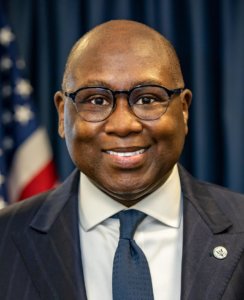 August 15, 2023 — As NCUA board member Rodney Hood’s term comes to a close this month, and with a Democrat expected to take his place, eyes turn to the Biden Administration for news of who that individual might be, though no successor has been named.
Hood served as NCUA Chairman under Trump in 2019 and then as an NCUA board member in 2021 when Todd Harper took over the Chairman position after nomination from President Biden. He also served on the board previously under President George W. Bush from 2005-2009.
Hood acknowledged the end of his term on the NCUA board back in July, remarking on his motivations for joining the board originally and his desire to further the credit union goal of “people helping people.”
“I hope that I have lived up to that commitment by demonstrating a fidelity to the tenets of safety and soundness while also striving to provide access to financial inclusion for the nearly 135 million members of our country’s credit union system,” said Hood. “In the coming weeks, I will begin another season in my life as my term on the NCUA board concludes in August. I would like to thank Lenwood Brooks and Hallie Williams Hailey in Chattanooga for all their hard work and support in my role as Chairman and board member.”
However, despite these remarks, Hood will remain on the NCUA board for the foreseeable future, as the Biden Administration has yet to name a successor. Furthermore, even if one were to be named tomorrow, it could take months for said successor to be confirmed by the Senate.
Hood, for example, was nominated in January 2019, but was not confirmed until March 2019 and was not sworn in until April 2019.
In light of this, Hood has expressed his willingness and intention to remain on the NCUA board in the coming months until his replacement is sworn in. This move is not out of the ordinary, though it is impossible to say how long Hood could unofficially “extend” his term through. Democrat Debbie Matz, for example, served for over a year after her term expired in 2016.
While this may seem inconsequential, considering Hood has already served for several years with the NCUA, it could have ramifications for key NCUA decisions in the upcoming months. Hood ensures a Republican majority on the board, as fellow board member Kyle Hauptman is also a Republican whereas Board Chairman Todd Harper is a Democrat.
Since the beginning of Harper’s term in 2021, he has worked to push through several proposals which have been blocked by the Republican majority. Meaning that Harper will either need to delay certain issues or risk an undesired outcome.
For instance, the NCUA recently requested information relating to climate change risk back in June. This move was led by Harper, and rejected by Hauptman, and while Hood supported the request for information, he made it clear he would not support any rulemaking or further action on it.
Though if Harper does delay decision-making while waiting for Biden to appoint another Democrat, he might have to wait a while, as the White House remains quiet on the topic.
Courtesy of Emily Claus, CUSO Magazine
Notice Also Stresses New BSA Whistleblower Provisions
On July 26, the Department of Commerce, the Department of the Treasury, and the Department of Justice released a joint compliance notice (the “Compliance Notice”) updating and summarizing each agency’s position regarding the voluntary self-disclosure by businesses of potential violations of sanctions, export controls, and other national security laws.
Asserting that voluntary self-disclosure can provide many benefits to a reporting business – potentially providing for a non-prosecution agreement or a 50 percent decrease in “base penalties” – the Compliance Notice provides each entity’s current position as to voluntary self-disclosure. The Compliance Notice also references the still-evolving whistleblower program under the Bank Secrecy Act (“BSA”), which now pertains to not only potential BSA violations, but also potential violations of sanctions law.
Department of Justice
On March 1, 2023, the Department of Justice (“DOJ”) updated its voluntary self-disclosure policy covering potential criminal violations of export control and sanctions laws. Under that policy, the DOJ notes that “where a company voluntarily self-discloses potentially criminal violations, fully cooperates, and timely and appropriately remediates the violations, [the DOJ’s National Security Division] generally will not seek a guilty plea, and there will be a presumption that the company will receive a non-prosecution agreement and will not pay a fine.”
However, to avail itself of this policy, the reporting company cannot retain any unlawfully obtained gains, and aggravating factors will prevent a company from relying upon the presumption of a non-prosecution agreement. Those factors include “egregious or pervasive criminal misconduct within the company, concealment or involvement by upper management, repeated administrative and/or criminal violations of national security laws, the export of items that are particularly sensitive or to end users of heightened concern, and a significant profit to the company from the misconduct.” In such cases, the DOJ may instead seek a deferred prosecution agreement or guilty plea (or, presumably, an indictment).
Further, to take advantage of the policy’s protections, a company is required to, in part: (1) make their disclosure within a reasonably prompt time after becoming aware of the potential violation, absent any other legal obligation to disclose; (2) make the disclosure prior to an imminent threat of disclosure or government investigation; (3) must timely and appropriately remediate any violations; (4) share all relevant non-privileged facts known at the time; and (5) fully cooperate when making the disclosure. Lastly, disclosures made only to regulatory agencies such as OFAC or the Bureau of Industry and Security (“BIS”) do not qualify for the DOJ’s policy.
The DOJ’s voluntary disclosure policy regarding potential sanctions and export control violations must be read in conjunction with the more general DOJ policy regarding corporate voluntary self-disclosures, announced in early 2023. Although there are many similarities between the two policies, they are not identical, and this can create challenges for a disclosure calculation. Moreover, the DOJ announced on March 3, 2023 that companies seeking advantageous resolutions of potential criminal violations must consider steps against employees involved in the violations, including claw backs, reduction of compensation and incentives, and termination.
Department of Commerce
In June of 2022, BIS’s Office of Export Enforcement (“OEE”) implemented a dual-track system to handle voluntary self-disclosures. Minor infractions are now fast-tracked with a warning or no-action letter, while potentially more serious violations will garner a review to determine if an enforcement action is warranted.
Although the OEE states that a company will receive “significant credit for coming forward voluntarily,” it also will provide additional relief from potential penalties by way of a mitigating factor, if that company previously has submitted a tip to OEE regarding a third-party having potentially violating the Export Administration Regulations. In contrast, a nondisclosure of a significant possible violation of the Export Administration Regulations will be considered by the OEE as an aggravating factor under BIS penalty guidelines.
Interestingly, the Compliance Notice stresses the important of internal investigations:
Additionally, companies cannot sidestep the “should we voluntarily self-disclose or not” decision by self-blinding and choosing not to do an internal investigation in the first place. The existence, nature, and adequacy of a company’s compliance program, including its success at self-identifying and rectifying compliance gaps, is itself considered a factor under the settlement guidelines.
One of the practical effects of the above language is that companies which do perform an internal investigation then presumably will feel pressured to disclose the results of any investigation which identifies a potential “compliance gap,” thereby creating a potentially circular decision-making process: i.e., an investigation to determine whether to disclose may increase the pressure to disclose, simply because the government will punish the company if it later learns of the non-disclosure. Of course, internal investigations can vary in quality, and “compliance gaps” can be arguable.
OFAC
The Office of Foreign Assets Control (“OFAC”) considers voluntary self-disclosure to be a mitigating factor under its guidelines, resulting in up to a 50 percent reduction in the base amount of a proposed civil penalty. In its review, OFAC will also consider other circumstances surrounding the apparent violation, such as “the existence, nature, and adequacy of the subject’s compliance program at the time of the apparent violation and the corrective actions taken in response to an apparent violation.”
However, OFAC lists several items that will prevent a disclosure from being deemed a voluntary self-disclosure, including: (1) Failing to disclose prior to or simultaneous with, the discovery by OFAC or another government agency of the apparent violation; (2) a third party is required to report the violation and/or the disclosure is not self-initiated; (3) the disclosure is false or misleading; and (4) the disclosure is materially incomplete.
BSA Whistleblower Program
The Compliance Notice also referenced the whistleblower program under the BSA, which has been previously covered in this blog (see here, here, here, here, here and here). The Anti-Money Laundering Act of 2020 (“the AMLA”) amended the BSA to expand whistleblower incentives and strengthen whistleblower protections. In part, the AMLA amended 31 U.S.C. § 5323 to provide that if the government recovers more than $1 million through an AML enforcement action, any qualifying whistleblower will receive a mandatory reward of up to 30% of the collected amount. However, there amendment did not provide a guaranteed monetary floor for an award (i.e., it could be zero to 30%), and Congress had not allocated funding for any awards. Congress addressed these perceived deficiencies by passing the “Anti-Money Laundering Whistleblower Improvement Act,” which was signed into law on December 29, 2022, and created both a “Financial Integrity Fund” to pay for whistleblower awards and a 10% floor when monetary sanctions were collection in amounts exceeding $1 million. It also expanded the BSA whistleblower provisions to apply to reports of potential violations of laws upon which U.S. economic sanctions are based, including the International Economic Emergency Powers Act, certain provisions of the Trading With the Enemy Act, and the Foreign Narcotics Kingpin Designation Act.
Under the Compliance Notice, the Financial Crimes Enforcement Network (“FinCEN”) appears to expand the breadth the whistleblower program by stating that it also may pay awards to whistleblowers whose information leads to the successful enforcement of a “related action.” Specifically, the Compliance Notice makes clear this includes the payment of awards stemming from enforcement actions taken under statutory authority such as the Export Control Reform Act. However, FinCEN notes that this will only apply in “certain circumstances,” so it is still unclear how this may apply in practice. FinCEN still needs to issue related proposed regulations.
Courtesy of John Georgievski, Ballard Spahr, MoneyLaunderingNews.com

Kerem Yücel | MPR News
Two well-known Minnesota credit unions are planning a merger that would make them the fourth-largest credit union in the state.
Leaders of Spire Credit Union and Hiway Credit Union said in a news release that they consider the move a “merger of equals.” But the plan involves Hiway joining Spire’s “more expansive community charter,” and Hiway members will need to approve the merger. The National Credit Union Administration has already approved the proposed merger.
The credit unions said current Spire President/CEO Dan Stoltz will become CEO of the new organization, and current Hiway President/CEO Dave Boden will become president. The combined organization will have a new name that’s yet to be determined.
“We’re proud to bring together two already strong credit unions for the betterment of all involved: our members, our people and our communities,” Boden said in a news release.
“With the expanded branch network, and to meet the needs of a larger organization, we’re excited to be able to offer potential new opportunities to our people,” Stoltz said in the release.
Spire and Hiway are currently the fifth- and sixth-largest credit unions in Minnesota, each with about $2 billion in assets.
Hiway has the smaller footprint, with four branches in the Twin Cities and more than 90,000 members. It also operates four high school branches in St. Paul. Spire has 22 branches, from the Iron Range to Waseca, Minn., although most are in the Twin Cities area. Spire has more than 150,000 members.
The credit unions said all branches will remain open, and all employees retained. Information sent to Hiway members says they will retain account numbers and other key banking features.
The vote by Hiway members is set to wrap up in September. If approved, the merger would take effect Jan. 1.
Courtesy of Tim Nelson, MPRNews.org
The Consumer Financial Protection Bureau (CFPB) filed a lawsuit in federal court against auto-loan servicer USASF Servicing (USASF) for a host of illegal practices that harmed individuals with auto loans. These practices include wrongfully disabling borrowers’ vehicles, improperly repossessing vehicles, double-billing borrowers for insurance premiums, and failing to return millions of dollars in refunds to consumers. The CFPB is seeking to obtain redress for consumers and civil money penalties and stop any future violations.
“The CFPB is suing USASF for a range of misconduct, including illegally activating devices that prevented borrowers from starting their cars,” said CFPB Director Rohit Chopra. “Given the rising cost of cars during the pandemic and jump in auto loan debt across the country, the CFPB is working to root out illegal activity in this market.”
USASF is an auto-loan servicer headquartered in Lawrenceville, Georgia. USASF serviced auto loans that were originated by an affiliate, U.S. Auto Sales, Inc., which was a buy-here-pay-here auto dealer and lender with 31 dealerships in the Southeast. USASF offered both Guaranteed Asset Protection and collateral-protection insurance, which are products that consumers can buy when they buy or lease a car. In April 2023, U.S. Auto Sales wound down most of its businesses.
The CFPB alleges that USASF:
- Illegally disabled cars: Many auto lenders require that cars are installed with devices using GPS technology that allow the lender or servicer to prevent a borrower from starting a car. These devices are known as “kill switches” or “starter interrupters.” USASF incorrectly disabled vehicles at least 7,500 times and caused these devices to play warning tones in vehicles over 71,000 times during periods when the consumer was not in default or was in communication with USASF about upcoming payments. USASF remotely disabled vehicles at least 1,500 times after explicitly promising consumers it would not do so.
- Failed to refund premiums to consumers: USASF offered consumers Guaranteed Asset Protection, which covers some of the difference (or gap) between the amount a borrower owes on their auto loan and what the car insurance will pay if the vehicle is stolen, damaged, or totaled. When consumers paid off their loans early or USASF repossessed a car and charged off an account, consumers were entitled to refunds of any Guaranteed Asset Protection premiums paid in advance for periods where they would no longer have coverage. USASF failed to obtain millions of dollars in refunds from the Guaranteed Asset Protection administrator.
- Double-billed consumers and misapplied payments: When consumers were enrolled in collateral-protection coverage by a USASF affiliate, they were also charged for that same coverage by USASF. Approximately 34,000 consumers were double-charged for the insurance each billing cycle, in some cases for over a year, costing consumers millions of dollars. USASF also wrongfully applied consumers’ extra loan payments first to late fees or collateral-protection insurance instead of accrued interest. This misapplication of payments caused consumers to pay over a million dollars in interest and fees that they would not have paid if USASF had correctly applied their payments.
- Wrongfully repossessed vehicles: USASF illegally repossessed the vehicles of some consumers who never qualified for repossession or had taken action to stop the repossession. In some instances USASF sold the vehicles that it had wrongfully repossessed.
Auto loans are the third-largest category of outstanding consumer debt, after mortgages and student loans. In recent years, the cost of vehicles has risen substantially, leading to increased borrowing. The CFPB has increased its monitoring of the auto lending market, and has taken action against auto finance companies for wrongful repossessions, poor credit reporting practices, and misrepresenting the cost of credit.
In a study released June 2023 by the Center for Responsible Lenders, analysts found that borrowers are charged nearly $3 billion annually for single-payment, payday installment, and car-title loans. Per the study’s authors, roughly $2.2 billion comes from single-payment and payday installment borrowers and another $700 million from car-title borrowers.
“By charging exorbitant fees without assessing the borrower’s ability to meet the terms and repay the loan, payday and car-title loans leave consumers susceptible to a cascade of adverse financial consequences, such as difficulty covering living expenses, increased overdraft fees, delinquency on other bills, involuntary loss of bank accounts, wage garnishment, and even bankruptcy,” wrote the authors.
Car-title loans come with additional risks
Though fewer and less well known than payday loans, car-title loans carry additional risks to borrowers. In essence, car-title loans are short-term, high interest loans where the borrower’s car title is put up as collateral, with the lender taking physical possession of the title in exchange for the cash.
Currently, seventeen states allow car-title loans. Not among these is Michigan, which has even gone so far as to issue a warning to consumers about these predatory loans and their illegal nature in the state: “Unlike a traditional auto loan where the vehicle is used as collateral and the lender’s interest is noted on the title and recorded with the Secretary of State as a lien, with an auto title loan, a borrower completes a short form, gives the vehicle’s title to the lender, and quickly gets cash — sometimes in as little as 15 minutes. This is illegal in Michigan.”
The appeal for these loans is obvious: extremely quick cash for individuals often with bad credit, unable to secure loans by other means. But as is often the case, these loans often result in default due to the high interest and short-term nature, resulting in repossession of the vehicle. In fact, according to the study, “one in five car-title loan sequences ending in vehicle repossession.”
In California, a state with few protections, “33% of car-title loans result in repossession of a vehicle” by creating a downward spiral of debt for the borrower that eventually becomes too great to ever repay.
CRL urges policymakers to pass legislation preventing the debt trap
Despite these payday installment, single-payment, and car-title loans averaging more than 300% APR, only 19 states and the District of Columbia have begun enforcing rate caps on these loans, bringing the maximum in those states to 36% APR or lower. Minnesota will become the 20th such state in 2024, which will save consumers a reported $4 million per year.
Waiting for each state to enact its own rules, however, isn’t good enough for the CRL. They suggest Congress expand the Military Lending Act to enact a federal rate cap, then let states enact and enforce further restrictions.
Opponents to these actions might claim that doing so will force lenders to close, thereby removing access to immediate, short-term cash for individuals in need. Credit unions can do more to reduce un- and underbanked communities, providing access to financial education and reasonable access to short-term secured and unsecured loans.
Courtesy of Esteban Camargo, CUSO Magazine
As fall approaches and budgeting season begins, we want to share the leading industry initiatives, including technology focus areas for 2024 roadmaps. What’s included in your strategic plan for 2024?
Increased Security Measures: SASE, SIEM/SOC
SASE (pronounced “sassy”), or Secure Access Service Edge, is just one example of a new approach to security. The idea is to ensure that your data and connections are secure, no matter where or how you’re connecting to do work. This is particularly valuable for remote workers, but it also applies to people who are on the go, working in branches, or out in the community. SASE covers not just PCs and laptops but also phones, tablets, and other devices. With SASE, you can have peace of mind knowing that your business and personal data are protected.
SIEM/SOC solutions provide your organization with Security Information Event Management (SIEM) and a Security Operations Center (SOC). Think of SIEM as the smoke detector and SOC as the firefighter. These tools are no longer just an add-on to your organization’s technology; they are a requirement in today’s security landscape. The most advanced providers offer not only SIEM/SOC but also fraud and compliance assistance.
Strategic and Budget Considerations:
-
SASE solutions, such as CATO
-
SIEM/SOC solutions, such as DefenseStorm or Adlumin
-
Security Awareness Training, such as KnowBe4; after all, security starts with your employees and how they interact with technology
-
Information Security Conference: CU Intersect
-
Join the NCU-ISAO, which is helping to enhance the community by sharing information and strengthening security measures
Microsoft 365 Utilization and Optimization
Would you buy a Ferrari only to go to the grocery store? I hope not. Similarly, if you haven’t incorporated AzureAD, M365, virtual cloud desktops, and other security measures in your strategy, you might be missing out on advanced capabilities that you’re already paying for.
The effective use of technology spend is crucial for credit unions to stay competitive and meet the expectations of their members. Embracing Microsoft 365 optimization is a strategic step towards achieving these goals, ensuring credit unions remain agile, member-focused, and at the forefront of technology and security.
Strategic and Budget Considerations:
-
Moving collaborative data into Teams and SharePoint
-
Defender for Endpoint
-
Defender for M365 for email security
-
A Pure IT Microsoft 365 Assessment
Into the Cloud: Shift from Physical Infrastructure
With the rise of both digital-centric banking and work-from-home models, on-premise solutions simply don’t meet the security, compliance, and collaboration needs of credit unions today.
Not only do solutions like SASE and Microsoft’s Azure AD (now Entra ID) help with this transition to the cloud, but increasing numbers of core providers are cloud-centric or capable of running in the cloud. We are seeing the movement of the Data Warehouse and business intelligence toolsets to the Cloud.
Strategic and Budget Considerations:
-
Moving your server infrastructure into Azure or AWS
-
Assess current and future vendor partners with Cloud capabilities or offerings that enable your organization’s growth and maturity; align with the business needs and timeline
AI Integrations to Bolster Service and Security
The explosion of AI chatbots, like ChatGPT, began in late 2022. Today, there seems to be an AI tool integrated into every single product: down to Grammarly, helping me keep this blog post readable. It seems like everyone is using AI these days, but it has to be done safely.
Although AI tools can bring about significant changes, inputting private or financial information poses significant security risks. It is crucial to have proper policies and processes in place to ensure the safe and secure use of AI.
Strategic and Budget Considerations:
-
Proper staff training and process implementation for open-source AI models
-
Private vendor AI tools to enhance member experience or your Security Operations Center (SOC)
Unification and Integration of Tools
A growing trend in member services is the use of data culmination tools and central portals for timely visibility. This involves integrating various tools and technology such as core platforms, member communication or Omni channels, and new account and loan applications all to increase productivity and consumption of critical information. There is a growing focus on automation and increased efficiencies for credit unions, as well as creating new solutions through fintech companies and other providers. Credit unions are seeking middleware and partners, such as Janusea, to work with new solutions and improve existing ones that currently rely on batch and dual entry systems.
Strategic and Budget Considerations:
-
Credit unions, CUSOs, and Fintechs no longer need to stress about the dreaded “integration” conversation with their vendors or partners
-
R&D on which middleware/integration companies can increase member service
-
Business Intelligence Analysis and Roadmap
-
Vendor Analysis and Integration capabilities
Courtesy of Julia Hendrickson, PureItCUSO
- Goldman Sachs CEO David Solomon said he isn’t worried about Apple’s new savings account overshadowing his bank’s own Marcus savings accounts.
- But Solomon said on Tuesday that he’s watching closely for “cannibalization.”
- Goldman Sachs offers high-yield savings accounts through its Marcus brand, while also partnering with Apple in financial products.
Courtesy of Kif Leswing, CNBC | Click here to learn more
Goldman Sachs CEO David Solomon said Tuesday he isn’t worried about Apple’s new savings account overshadowing Goldman’s own Marcus offerings but that he’s watching closely for “cannibalization.”
The Wall Street firm reported first-quarter results Tuesday, a day after Apple launched its new savings accounts with an annual percentage yield over 4%. The new accounts carry Apple’s brand and are administered through the iPhone, but Goldman Sachs is the company’s financial partner.
“We’ve obviously worked very closely at the overlap between who holds credit cards and who has a Marcus deposit, and that overlap is small,” Solomon said on his company’s earnings call. “But we’ll obviously watch closely to see whether or not there’s any cannibalization.”
Solomon added that the Apple offering “is a way for us to try to open up another deposit channel” and said “it’s always good for us to broaden our deposit base.”
The Apple-Goldman relationship is unique in that it brings together two historic brands in very different markets and underscores the degree to which some tech giants are jumping into financial services, potentially as competitors. Apple builds features for the iPhone and its Wallet app, like its Apple Card credit card, while Goldman is the actual bank behind the company’s financial services.
Goldman has announced plans to become a large digital bank, perhaps competing at times with Apple to sign up new customers. For example, Goldman offers high-yield savings accounts through Marcus. CNBC has previously reported that the bank’s consumer-focused division, which handles Marcus and Apple partnerships, has struggled with shelved projects, leadership turnover and regulatory probes.
Solomon said Goldman would welcome the deposits from Apple’s savings account and would deploy them within its own client base.
Courtesy of By Nick Timiraos, Wall Street Journal
Stubbornly high inflation and tight labor markets led Federal Reserve officials to signal they could raise interest rates at their next meeting despite a greater likelihood of a recession later this year.
The fallout from the failures of two midsize banks led Fed officials to consider skipping a rate increase at their meeting last month, but they concluded regulators had calmed stresses enough to justify a quarter-point rate rise, according to minutes of the March 21-22 gathering released Wednesday.
For the first time since officials began lifting rates a year ago, the Fed staff forecast presented at the meeting anticipated a recession would start later this year due to banking-sector turmoil, the minutes said. Previously, the staff had judged a recession was roughly as likely to occur as not this year.
Looking ahead, the minutes hinted at potential policy divisions, with some officials pointing to greater risks of a sharper-than-anticipated slowdown and others highlighting the prospect of firmer inflation this year.
Officials concluded that given the strength of price pressures and the demand for labor, “they anticipated that some additional policy firming may be appropriate” to bring inflation down to the central bank’s 2% goal, the minutes said. They also said they would pay close attention to bank lending conditions as they weigh their next move.
The latest rate rise brought the Fed’s benchmark federal-funds rate to a range between 4.75% and 5%. All 18 officials who participated in last month’s meeting supported the increase, the minutes said. New economic projections released then showed nearly all expected they would lift rates one more time this year. Most of them expected to hold rates steady after that, provided the economy grows little this year and labor demand cools.
Over the past year, the Fed has raised rates at its fastest pace since the early 1980s to combat inflation that jumped to a 40-year high last year. Until recently, officials had signaled that they were likely to keep raising lifting rates until they saw more conclusive evidence that economic activity and price increases were slowing.
The rate outlook became much more uncertain after banking-system stresses flared last month, beginning March 9 when panicked depositors pulled money from Silicon Valley Bank, which regulators closed the following day. Regulators closed a second institution that also faced a run, Signature Bank, on March 12 and intervened aggressively to shore up confidence in the banking system.
Many Fed officials anticipated “there would be some tightening of credit conditions, and that would really have the same effects as our policies do,” Fed Chair Jerome Powell said at a news conference March 22. “If that did not turn out to be the case, in principle, you would need more rate hikes.”
Inflation moderated somewhat last month, the Labor Department said Wednesday. The consumer-price index rose 0.1% in March and by 5% over the previous 12 months, the smallest annual increase in nearly two years. But core prices, which exclude volatile food and energy items and which central bankers see as a better gauge of underlying inflation, rose 0.4% in March and by 5.6% over the previous year, up from 5.5% in February.
The Fed fights inflation by slowing the economy through raising rates, which causes tighter financial conditions such as higher borrowing costs, lower stock prices and a stronger dollar, which curb demand.
“While the full impact of this policy tightening is still making its way through the system, the strength of the economy and the elevated readings on inflation suggest that there is more work to do,” San Francisco Fed President Mary Daly said in a speech Wednesday.
The question ahead of the Fed’s May 2-3 meeting is whether officials place more emphasis on anecdotes and surveys of credit conditions if they signal a pullback in lending, which could call for forgoing an increase or raising rates while signaling a pause, or whether they place more weight on economic data that might show less effect on credit availability but be more dated.
Philadelphia Fed President Patrick Harker said Tuesday he has long anticipated the central bank would need to raise the fed-funds rate above 5% “and then sit there for a while.”
Last year, supply-chain healing offered a compelling reason to think price growth would slow. This year, the case for inflation falling depends more squarely on declines in the demand for labor and consumer spending. “If you don’t see demand moving [down], it is hard to envision how you think inflation is going to” slow, Richmond Fed President Tom Barkin told reporters on March 30.
“You have to have a theory of why inflation’s going to come down if you think it is going to come down,” he said.
Courtesy of Anna Hrushka, Banking Dive
Atlanta-based Greenlight is making its kid-focused banking services available to traditional financial institutions, the fintech announced on Wednesday.
The new partnership program, called Greenlight for Banks, allows banks and credit unions to offer the fintech’s suite of banking and education products to their customers through a co-branded landing page and app.
Over half a dozen firms, including Morgan Stanley, WaFd Bank and Community Financial Credit Union have partnered with Greenlight to offer the fintech’s services to their customers, Matt Wolf, Greenlight’s senior vice president of business development said.
Greenlight is actively involved in discussions with over 100 financial institutions, he added.
“In those conversations with financial institutions, we found that many don’t have the expertise or resources to create a compelling digital banking experience for the next generation,” Wolf said. “We’ve designed something that really helps financial institutions, seamlessly integrate family banking into their own ecosystems.”
Greenlight, which was co-founded by Tim Sheehan and Johnson Cook, launched a debit card for kids in 2017.
The fintech has since expanded its offerings to include savings and investing for children, while allowing parents to automate allowances and supervise their dependents’ money management.
In January, Greenlight launched a financial literacy game called Level Up, which banks and credit unions will also be able to make available to their own customers through Greenlight for Banks.
Lenders who partner with Greenlight have the option to hold the deposits gathered by the fintech, or allow them to be held by Greenlight’s partner bank, Community Federal Savings Bank, which issues the Greenlight debit card.
While banks are eager to launch products that reach the next generation of customers, bank accounts geared toward children typically don’t have high balances, meaning, they won’t be large deposit generators for banks, Wolf said.
“A couple transactions a month is probably not going to really rise to the top of their technology roadmap and prioritization,” Wolf said.
But offering services targeted toward kids and their parents allows a bank or credit union to create deep and potentially long-lasting relationships, Wolf added.
Courtesy of Candice Choi, Wall Street Journal (click here to listen to the story)
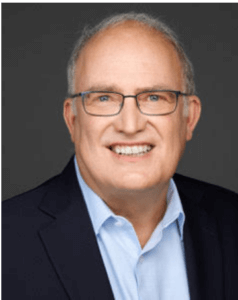 John Bovenzi is part of the small club of people who have run a failed U.S. bank, a group whose membership expanded by two this month when regulators swooped in to take over Silicon Valley Bank and Signature Bank.
In 2008, Mr. Bovenzi, a longtime Federal Deposit Insurance Corp. staffer, took the helm at the failed mortgage lender IndyMac. What he discovered, and what likely faces executives running the latest failed banks: Deposits flood out, but few come in. The employees who haven’t left are looking for other jobs. It is possible some of the remaining higher-ups are responsible for what went wrong—and might even be questioned by law-enforcement officials.
“So that’s a little twist—you’re relying on people, but at the same time, investigators want to talk to everybody,” Mr. Bovenzi said.
Until the failures of SVB and Signature, IndyMac was the second-biggest bank failure in U.S. history, behind Washington Mutual. Now the two recent collapses have bumped IndyMac into fourth place.
Like IndyMac, both SVB and Signature were taken over by the FDIC. Unlike with IndyMac, the FDIC was able to draw on a roster of seasoned banking executives it had assembled in recent years for such emergencies. Tim Mayopoulos, former chief executive officer at Fannie Mae and a former top executive at Bank of America Corp., jumped in at SVB. Greg Carmichael, a former Fifth Third Bancorp chief, parachuted into Signature.
When IndyMac failed as its home loans soured, the FDIC didn’t have a reserve corps of bank executives. It fell to Mr. Bovenzi, the agency’s chief operating officer, to take over.
Mr. Bovenzi and a team from the FDIC flew to IndyMac’s headquarters in Pasadena, Calif., on a Thursday, fanning out to different hotels and avoiding use of government-issued identification. “We didn’t want the whole town to know it was filled with people from the FDIC the night before [the bank] was going to close,” he said.
When the FDIC team arrived at IndyMac’s offices the next day, Mr. Bovenzi said IndyMac’s management didn’t seem surprised—the CEO had already cleaned out his office.
The FDIC shut down the bank’s branches soon after, which was before the end of the business day on the West Coast. That caused a headache when newspapers carried photos of customers banging on the doors of bank branches, desperate to get their money out.
On the first weekend after seizing the bank, the FDIC team’s priority was to separate insured and uninsured deposits in advance of an expected influx of customers on Monday morning. Unlike with Silicon Valley Bank and Signature, regulators only backed insured deposits, which at the time were capped at $100,000. (Later, the FDIC raised the limit to $250,000.)
Mr. Bovenzi’s other pressing goal: telegraphing to the public through media interviews that insured deposits were safe. It was a tough sell given the public angst over IndyMac.
“The only story that drew more attention that weekend was the birth of twins to Angelina Jolie and Brad Pitt,” Mr. Bovenzi wrote in a book about his experiences at the FDIC.
Another challenge: Mr. Bovenzi, who was then 55, had never worked at an actual bank, having started at the FDIC after graduate school. He said his deep knowledge of deposit insurance made him believe he could stabilize a chaotic situation.
“He just exuded so much confidence,” said Arleas Upton Kea, the FDIC’s head of internal operations at the time and one of the agency staffers who flew out to IndyMac. “And having people keep their money in financial institutions is all about maintaining confidence.”
Even so, Mr. Bovenzi’s reassurances didn’t initially work.
“When we opened Monday morning, there was a bank run,” Mr. Bovenzi said. “There were lines at all the branches of IndyMac.”
It was hot in Pasadena that July, but Mr. Bovenzi still looked the part of a government official in suit and tie when he went outside to try to convince people that they didn’t need to stand in line. People were mostly calm, but refused to budge.
The bank eventually handed out numbers to customers giving them a time when they could return to withdraw money. That thinned the lines but didn’t slow withdrawals. Over the first few weeks, customers drained about $3 billion in deposits, Mr. Bovenzi said.
At the same time, regulators were trying to keep employees and put together retention packages for those who stuck it out. Not everyone was asked to stay. The loan-origination offices were shut down as the lender’s focus shifted to servicing existing mortgages.
“We weren’t interested in making new loans,” Mr. Bovenzi said. “That’s what got the bank in trouble in the first place—all the subprime mortgages.”
Mr. Bovenzi, now 70, recalls that as the new chief he moved into the ousted CEO’s corner office, which was on the sixth floor, with expensive art and floor-to-ceiling windows looking out to the San Gabriel Mountains. The former CEO’s company car, a Mercedes, was still in the parking lot. Mr. Bovenzi said he refrained from driving it. The car became one of the first IndyMac items the government sold.
Down the hallway, Mr. Bovenzi passed a man sitting in an office. “At one point, I went over and asked him, ‘Well what do you do?’ And he says, ‘Well I’ve got a gun, I’m here to guard the office and the CEO,’” said Mr. Bovenzi, citing threats the company had been getting.
Like the Mercedes, that employee was soon gone.
Over time, the situation stabilized. Mr. Bovenzi was able to fly home more to see his wife, Erica, more often. At first, he told her that IndyMac would be a short-term assignment. “He comes home and he says he’s going to California for a couple of weeks, and that wasn’t true,” said Ms. Bovenzi, who was a deputy general counsel at the FDIC at the time.
It wasn’t until March 2009 that regulators sold IndyMac. Mr. Bovenzi left the FDIC soon after, joining Oliver Wyman, a management-consulting firm.
Today, the Bovenzis run a financial-services consulting firm in Alexandria, Va. Mr. Bovenzi expects Silicon Valley Bank’s eventual sale to be much quicker than that of IndyMac. Already, the FDIC announced that New York Community Bancorp’s Flagstar Bank would take on most of Signature’s deposits.
Still, Mr. Bovenzi warned of unexpected twists. At IndyMac, Lehman Brothers was hired to advise on the sale of the lender. Soon after, the investment bank itself collapsed in dramatic fashion.
“It was one more thing that can go wrong,” Mr. Bovenzi said.
NASCUS Summary: Registry of Supervised Nonbanks that Use Form Contracts To Impose Terms and Conditions That Seek To Waive or Limit Consumer Legal Protections
12 CFR Part 1092
The Consumer Financial Protection Bureau (CFPB) is issuing this proposed rule to require that nonbanks subject to its supervisory authority, with limited exceptions, register each year in a nonbank registration system established by the CFPB information about their use of certain terms and conditions in form contracts for consumer financial products/services that pose risks to consumers.
Comments must be received by April 3, 2023, and the proposed rule can be found here.
Log-in required to view the entire summary
CFPB Publishes New Findings on Financial Profiles of Buy Now, Pay Later Borrowers
The CFPBhas published a new report analyzing the financial profiles of Buy Now, Pay Later borrowers. While many Buy Now, Pay Later borrowers use the product without noticeable indications of financial stress, the report finds that Buy Now, Pay Later borrowers are more likely to be active users of other types of credit products like credit cards, personal loans, and student loans. They are also more likely to exhibit measures of financial distress than non-users. For example, Buy Now, Pay Later borrowers are more likely to be highly indebted or have revolving balances or delinquencies on their credit cards compared to consumers who do not use Buy Now, Pay Later products. Buy Now, Pay Later borrowers are also more likely to use high-interest financial services such as payday loans, pawn loans, and bank account overdrafts. The report follows previous CFPB research on the Buy Now, Pay Later market.
CFPB Announces Appointments of New Advisory Committee Members
The CFPB announced the appointment of new members to the Consumer Advisory Board, Community Bank Advisory Council, Credit Union Advisory Council, and Academic Research Council.
The Dodd-Frank Wall Street Reform and Consumer Protection Act charges the CFPB with establishing a Consumer Advisory Board to provide advice on a variety of consumer finance issues. Members of the Consumer Advisory Board represent the various districts of the Federal Reserve System. Each member appointed to the Consumer Advisory Board was recommended by a president of a Federal Reserve Bank.
In addition, the Community Bank Advisory Council and Credit Union Advisory Council advise and consult the CFPB on financial issues related to community banks and credit unions. The Academic Research Council engages on the strategic research planning process and research agenda, and provides feedback on research methodologies and collection strategies.
New CFPB Issue Spotlight Examines High Fees that Chip Away at Public Benefits
The Consumer Financial Protection Bureau (CFPB) released a new issue spotlight examining how the financial products used to deliver public benefits, like Social Security and unemployment compensation, affect individuals’ ability to fully access the assistance provided through those programs.