Courtesy of Candice Choi, Wall Street Journal (click here to listen to the story)
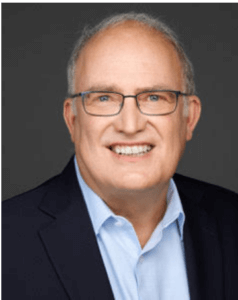 John Bovenzi is part of the small club of people who have run a failed U.S. bank, a group whose membership expanded by two this month when regulators swooped in to take over Silicon Valley Bank and Signature Bank.
In 2008, Mr. Bovenzi, a longtime Federal Deposit Insurance Corp. staffer, took the helm at the failed mortgage lender IndyMac. What he discovered, and what likely faces executives running the latest failed banks: Deposits flood out, but few come in. The employees who haven’t left are looking for other jobs. It is possible some of the remaining higher-ups are responsible for what went wrong—and might even be questioned by law-enforcement officials.
“So that’s a little twist—you’re relying on people, but at the same time, investigators want to talk to everybody,” Mr. Bovenzi said.
Until the failures of SVB and Signature, IndyMac was the second-biggest bank failure in U.S. history, behind Washington Mutual. Now the two recent collapses have bumped IndyMac into fourth place.
Like IndyMac, both SVB and Signature were taken over by the FDIC. Unlike with IndyMac, the FDIC was able to draw on a roster of seasoned banking executives it had assembled in recent years for such emergencies. Tim Mayopoulos, former chief executive officer at Fannie Mae and a former top executive at Bank of America Corp., jumped in at SVB. Greg Carmichael, a former Fifth Third Bancorp chief, parachuted into Signature.
When IndyMac failed as its home loans soured, the FDIC didn’t have a reserve corps of bank executives. It fell to Mr. Bovenzi, the agency’s chief operating officer, to take over.
Mr. Bovenzi and a team from the FDIC flew to IndyMac’s headquarters in Pasadena, Calif., on a Thursday, fanning out to different hotels and avoiding use of government-issued identification. “We didn’t want the whole town to know it was filled with people from the FDIC the night before [the bank] was going to close,” he said.
When the FDIC team arrived at IndyMac’s offices the next day, Mr. Bovenzi said IndyMac’s management didn’t seem surprised—the CEO had already cleaned out his office.
The FDIC shut down the bank’s branches soon after, which was before the end of the business day on the West Coast. That caused a headache when newspapers carried photos of customers banging on the doors of bank branches, desperate to get their money out.
On the first weekend after seizing the bank, the FDIC team’s priority was to separate insured and uninsured deposits in advance of an expected influx of customers on Monday morning. Unlike with Silicon Valley Bank and Signature, regulators only backed insured deposits, which at the time were capped at $100,000. (Later, the FDIC raised the limit to $250,000.)
Mr. Bovenzi’s other pressing goal: telegraphing to the public through media interviews that insured deposits were safe. It was a tough sell given the public angst over IndyMac.
“The only story that drew more attention that weekend was the birth of twins to Angelina Jolie and Brad Pitt,” Mr. Bovenzi wrote in a book about his experiences at the FDIC.
Another challenge: Mr. Bovenzi, who was then 55, had never worked at an actual bank, having started at the FDIC after graduate school. He said his deep knowledge of deposit insurance made him believe he could stabilize a chaotic situation.
“He just exuded so much confidence,” said Arleas Upton Kea, the FDIC’s head of internal operations at the time and one of the agency staffers who flew out to IndyMac. “And having people keep their money in financial institutions is all about maintaining confidence.”
Even so, Mr. Bovenzi’s reassurances didn’t initially work.
“When we opened Monday morning, there was a bank run,” Mr. Bovenzi said. “There were lines at all the branches of IndyMac.”
It was hot in Pasadena that July, but Mr. Bovenzi still looked the part of a government official in suit and tie when he went outside to try to convince people that they didn’t need to stand in line. People were mostly calm, but refused to budge.
The bank eventually handed out numbers to customers giving them a time when they could return to withdraw money. That thinned the lines but didn’t slow withdrawals. Over the first few weeks, customers drained about $3 billion in deposits, Mr. Bovenzi said.
At the same time, regulators were trying to keep employees and put together retention packages for those who stuck it out. Not everyone was asked to stay. The loan-origination offices were shut down as the lender’s focus shifted to servicing existing mortgages.
“We weren’t interested in making new loans,” Mr. Bovenzi said. “That’s what got the bank in trouble in the first place—all the subprime mortgages.”
Mr. Bovenzi, now 70, recalls that as the new chief he moved into the ousted CEO’s corner office, which was on the sixth floor, with expensive art and floor-to-ceiling windows looking out to the San Gabriel Mountains. The former CEO’s company car, a Mercedes, was still in the parking lot. Mr. Bovenzi said he refrained from driving it. The car became one of the first IndyMac items the government sold.
Down the hallway, Mr. Bovenzi passed a man sitting in an office. “At one point, I went over and asked him, ‘Well what do you do?’ And he says, ‘Well I’ve got a gun, I’m here to guard the office and the CEO,’” said Mr. Bovenzi, citing threats the company had been getting.
Like the Mercedes, that employee was soon gone.
Over time, the situation stabilized. Mr. Bovenzi was able to fly home more to see his wife, Erica, more often. At first, he told her that IndyMac would be a short-term assignment. “He comes home and he says he’s going to California for a couple of weeks, and that wasn’t true,” said Ms. Bovenzi, who was a deputy general counsel at the FDIC at the time.
It wasn’t until March 2009 that regulators sold IndyMac. Mr. Bovenzi left the FDIC soon after, joining Oliver Wyman, a management-consulting firm.
Today, the Bovenzis run a financial-services consulting firm in Alexandria, Va. Mr. Bovenzi expects Silicon Valley Bank’s eventual sale to be much quicker than that of IndyMac. Already, the FDIC announced that New York Community Bancorp’s Flagstar Bank would take on most of Signature’s deposits.
Still, Mr. Bovenzi warned of unexpected twists. At IndyMac, Lehman Brothers was hired to advise on the sale of the lender. Soon after, the investment bank itself collapsed in dramatic fashion.
“It was one more thing that can go wrong,” Mr. Bovenzi said.
CFPB Issues Determination that State Disclosure Laws on Business Lending are Consistent with the Truth in Lending Act
The Consumer Financial Protection Bureau (CFPB) announced it has determined that state disclosure laws covering lending to businesses in California, New York, Utah, and Virginia are not preempted by the federal Truth in Lending Act. The CFPB examined the state disclosure laws to determine if they were inconsistent with and preempted by the Truth in Lending Act. After analyzing public comments on its preliminary determination, the CFPB affirms there is no conflict because the state laws extend disclosure protections to businesses and entrepreneurs that seek commercial financing. Read more
PUBLISHED MAR 24, 2023
CFPB Want to Know About Your Experiences with Data Brokers
We often don’t get to choose the companies that control our most personal and sensitive information. Data brokers is a term to describe those companies that collect, aggregate, sell, resell, license, or share our personal information with others.
Data brokers play a decisive role in our financial lives, impacting whether we’re able to buy a home or find a job. The CFPB wants to hear from the public about the business practices of data brokers and how those practices have directly affected people’s lives. We have released a Request for Information to understand the full scope and breadth of the industry and whether all data brokers are playing by the same rules.
Congress passed the Fair Credit Reporting Act in response to concerns about how companies were creating and selling detailed dossiers of consumers’ personal information. Our inquiry seeks information about data broker business practices employed in the market today to inform the CFPB’s efforts to administer the law, including planned rulemaking under the FCRA. Read more
Courtesy of Saul Ewing LLP, JDSupra
On March 7, 2023, the U.S. Department of Housing and Urban Development (the “HUD”) Secretary, Marcia L. Fudge, issued a public memorandum (the “Memo”) expressing concern over a lack of transparency in fees charged to residential tenants. The Memo calls on housing providers and state and local governments to adopt policies promoting fairness and transparency of fees charged to renters, citing President Biden’s urging that federal agencies “crack down” on so-called “junk fees” across the economy, including housing. The referenced fees include application fees, move-in fees, late fees, high-risk fees or security bonds, and convenience fees for online payments. The Memo also expresses continued concern over tenant screening practices, and commits to releasing best practices on the use of such reports to be developed with several other agencies.
What You Need to Know:
- On March 7, 2023, HUD Secretary Marcia L. Fudge issued a memorandum continuing to highlight concerns over “junk fees” and tenant screening practices that inhibit fairness and transparency in rental housing.
- Secretary Fudge offered four specific policies to promote fairness and transparency for renters, including eliminating and/or limiting application fees, allowing a single application fee to cover multiple applications, eliminating duplicative, excessive and/or undisclosed fees, and more clearly identifying total recurring monthly costs to tenants.
- HUD, the Consumer Financial Protection Bureau, the Federal Housing Finance Agency, the Federal Trade Commission, and the U.S. Department of Agriculture will collaborate to release best practices on the use of tenant screening reports, including the importance of communicating whether such reports are used to reject applicants or increase fees and providing applicants with the opportunity to address inaccurate information therein.
Secretary Fudge’s memo is yet another follow-up to the Biden-Harris Administration’s Blueprint for a Renter Bill of Rights that was designed to promote fairness and equity in rental housing. She urges all housing providers and state and local governments to take actions to ensure that only actual and legitimate fees are assessed to renters. She also endorsed specific policies that HUD hopes to see implemented across all rental housing providers and property management companies, including:
- Eliminating rental application fees or limiting application fees to only those necessary to cover actual and legitimate costs for services;
- Allowing a single application fee to cover multiple applications on the same platform or across multiple properties owned by one housing provider or managed by one company across providers;
- Eliminating duplicative, excessive, and undisclosed fees at all stages of the leasing process such as administrative fees and other processing fees in addition to rental application fees; and
- Clearly identifying bottom-line amounts that tenants will pay for move-in and monthly rent in advertisements of rental property and in lease documents, including all recurring monthly costs and their purpose.
Secretary Fudge also reiterated that HUD will coordinate with the Consumer Financial Protection Bureau, Federal Housing Finance Agency, Federal Trade Commission, and U.S. Department of Agriculture to collectively develop and release best practices on the use of tenant screening reports, including the importance of communicating whether such reports are used to reject applicants or increase fees and providing applicants with the opportunity to address inaccurate information therein.
The Memo is yet another indicator of the heightened scrutiny owners/operators of rental housing are facing at the federal, state and local levels surrounding pass-through costs and other fees charged to tenants and the use of tenant screening reports. Housing providers should continue to evaluate the need to revise their existing policies and practices surrounding these issues given the ongoing “whole of government effort” to “crack down” on industry-wide practices and the derivative Fair Housing Act and other statutory implications.
 World Council of Credit Unions Tuesday issued “What Credit Unions Should Know About Sustainable Finance”, a guide to help credit unions understand many of the international standards and emerging regulatory frameworks surrounding climate-related and sustainable finance issues.
World Council has been working on this issue for many years, so that international standard setters tailor regulations to accommodate the credit union cooperative model. Further, World Council has been working to position credit unions as a differentiator on ESG-related issues, while ensuring that the benefits of the member-owned, not-for-profit model are contemplated.
“The past few years have dictated the need for flexibility in all areas of our lives, and the need to adapt holds equally true for the regulatory landscape. Credit unions must be ready to undertake new sustainable finance requirements, while finding new and innovative ways to support climate resilience,” said Panya Monford, World Council Assistant General Counsel of International Advocacy.
Specifically, the publication covers:
- How global frameworks are supporting climate change and sustainability. Global authorities set global standards and thresholds by which all supplementary standard setters and regulators should abide.
- How global and international standard setters are addressing climate change through guidance and regulation. While global frameworks are concerned with climate change en bloc, global standard setters are drafting regulatory guidance and regulation that not only supports climate-related matters, but issues that affect the environment, as well as investors who desire to be informed about the environmental risks associated with their investments.
- The need for global standard setters to require regulatory authorities at the national level to adhere to proportional regulation. This will ensure that small financial institutions are not overregulated by rules that are tailored for large, systemically important banks. Generally, standard setting bodies construct the rules, while regulatory authorities (typically at the national or jurisdictional level) enforce them.
- The commitment to sustainable finance and climate-related issues by the Basel Committee, International Accounting Standards Board, G20, European Commission, Financial Stability Board and European Securities Market Authority. While these standard setters are not the only authorities involved in structuring climate-related, sustainable finance rules, they are the leading authorities shaping sustainable finance regulation.
As implementation of these final and in-progress standards are adopted at the national level, this will be an evolving and emerging area where it is critical to ensure that the credit union voice is heard.
CFPB Enhances Tool to Promote Competition and Comparison Shopping in Credit Card Market
Today, the Consumer Financial Protection Bureau (CFPB) launched launched an improved survey of credit card issuers that can help consumers and families compare interest rates and other features when shopping for a new credit card. Americans pay $120 billion in credit card interest and fees each year, which contributes to the almost trillion dollars in nationwide household credit card debt. In the current high-rate environment, it is important for Americans to be able to be able to accurately compare products. Upgrades to the CFPB’s terms of credit card plans survey are designed to increase price competition in the credit card market by allowing people to comparison shop for the best prices and products. The survey will also help smaller credit card issuers, who often offer the lowest rates, reach comparison shoppers. Read more
2022 HMDA Data on Mortgage Lending Now Available
The Home Mortgage Disclosure Act (HMDA) Modified Loan Application Register (LAR) data for 2022 are now available on the Federal Financial Institutions Examination Council’s (FFIEC) HMDA Platform for approximately 4,394 HMDA filers. The published data contain loan-level information filed by financial institutions and modified to protect consumer privacy.
To increase public accessibility, the annual loan-level LAR data for each HMDA filer are now available online. Previously, users could obtain LAR data only by making requests to specific institutions for their annual data. To allow for easier public access to all LAR data, the Consumer Financial Protection Bureau’s (CFPB) 2015 HMDA rule made the data for each HMDA filer available electronically on the FFIEC’s HMDA Platform. This year, in addition to institution-specific modified LAR files, users can download one combined file that contains all institutions’ modified LAR data. Read more
Join us Monday, March 27, 2023, 1:00 – 3:30 pm EST
NASCUS is bringing back its “New Commissioner Orientation.” This 2.5-hour virtual event is designed to introduce new state agency heads and/or agency senior staff to NASCUS and our resources available to support your state agency’s mission. We will also provide a brief history of the credit union system and NASCUS’s beginnings, give an update on the current state of the credit union system, and discuss the hot topics in the sector today.
Whether you are new to your agency or have been involved with NASCUS for years but want a refresher, you are welcome to participate. Any senior agency staff are welcome are welcome to join us as well.
RSVP or Questions: To participate in the meeting, please RSVP to [email protected].
Location: A NASCUS Teams Link will be sent out to participants in advance of the virtual meeting.
Cost: There is NO cost for participating in this event.
CFPB Heightens Scrutiny of Unlawful Collection of Payments on Discharged Student Loans
The Consumer Financial Protection Bureau (CFPB) released a bulletin warning servicers of their obligation to halt unlawful conduct with respect to private student loans that have been discharged by bankruptcy courts. The bulletin details recent findings by CFPB examiners that certain loan servicers were illegally returning loans to collections after bankruptcy courts had discharged the loans. The CFPB is directing these servicers to return illegally collected payments to affected consumers and immediately cease these unlawful collection tactics. The bulletin also makes clear that the CFPB will continue to examine student loan servicers’ handling of these loans to detect whether these illegal practices persist at other companies. Read more
PUBLISHED MAR 15, 2023
The Consumer Financial Protection Bureau (CFPB) issued the 2022 Financial Literacy Annual Report to Congress.
The Dodd-Frank Wall Street Reform and Consumer Protection Act (Dodd-Frank Act) mandates that the Director of the Consumer Financial Protection Bureau (CFPB) submit to Congress an annual report on the CFPB’s financial literacy activities and strategy to improve the financial literacy of consumers.1 We are pleased to submit this 10th Financial Literacy Annual Report. The report covers fiscal year 2022 (FY22), the period from October 2021 through September 2022. Read more
PUBLISHED MAR 15, 2023
CFPB Releases 2023 HMDA Transactional and Institutional Coverage Charts
The CFPB released the 2023 HMDA Transactional and Institutional Coverage Charts. These charts update the closed-end threshold pursuant to the United States District Court for the District of Columbia September 23, 2022, order in NCRC et al. v. CFPB.
You can access the 2023 HMDA Transactional and Institutional Coverage Charts here: www.consumerfinance.gov/compliance/compliance-resources/mortgage-resources/hmda-reporting-requirements/.
 Sen. Elizabeth Warren, D-MA, on Tuesday proposed a legislative route to do the same, but Republicans and even some Democrats are waiting on the Fed’s review of recent bank failures.
The Federal Reserve is reviewing the capital and liquidity requirements it imposes on banks with between $100 billion and $250 billion in assets, The Wall Street Journal and the Financial Times reported Tuesday, citing a person familiar with the matter.
Such an adjustment would have put Silicon Valley Bank, which counted $209 billion in assets before it failed Friday, and Signature Bank, which had $110 billion, under potentially stricter guidelines.
The Fed in October proposed requiring banks with between $250 billion and $700 billion in assets to carry long-term debt that would be converted into equity to recapitalize the bank in times of extreme stress. That would put the burden of losses on investors rather than taxpayers in a bailout situation.
Additionally, Michael Barr, the Fed’s vice chair for supervision, warned in December that the central bank would complete a “holistic” review of the framework behind stress tests that set capital requirements, but he didn’t give a time frame then.
Last week’s bank failures may well hasten that timeline.
Proposed changes may require more banks to report unrealized gains and losses on some securities as part of their capital, according to The Wall Street Journal. Silicon Valley Bank, for example, concentrated its balance sheet in long-term assets, leaving it more susceptible to failure if customers withdrew their funds immediately.
The rule-change process for the Fed’s October proposal on $250 billion-to-$700 billion-asset banks allows for public comment and takes months. The central bank, however, can choose, under Title 12 of the U.S. Code, to issue an order placing new requirements such as resolution plans, counterparty credit limits or annual stress tests, on banks with more than $100 billion in assets to protect financial stability, American Banker reported.
“That’s something that the Fed could do tomorrow,” Peter Conti-Brown, a professor at the University of Pennsylvania’s Wharton School of Business, told the publication.
Some lawmakers are blaming event bank failures, in part, on a 2018 rollback of parts of the Dodd-Frank Act.
S. 2155, sponsored by Sen. Mike Crapo, R-ID, raised — from $50 billion in assets to $200 billion — the threshold of banks subject to the Fed’s toughest supervisory measures, including stress tests and capital and liquidity requirements.
Sen. Elizabeth Warren, D-MA, on Tuesday proposed a bill to repeal S. 2155.
Courtesy of Dan Ennis, BankingDive
 The NCUA held its third open meeting of 2023. Chairman Todd Harper kicked off the meeting further, reinforcing his statement from March 13, that the credit union system remains well-capitalized and on a solid foundation. He also reiterated the many liquidity sources available to credit unions. Vice Chair Kyle Hauptman and Board member Rodney Hood echoed Chairman Harper’s comments.
The chairman’s complete statement from Thursday’s board meeting can be found here.
A single agenda item was considered, a final rule on subordinated debt, which the board voted to approve. The final rule makes two changes to the current subordinated debt rule that was finalized in 2020. Specifically, the rule replaces the 20-year maximum maturity of Subordinated Debt Notes and Grandfathered Secondary Capital (GSC) to the later of 30 years from the date of issuance or January 1, 2052. Second, the final rule extends the regulatory capital treatment of any credit union seeking to issue notes with maturities exceeding 20 years and must demonstrate how the instrument would continue to be considered “debt.”
The final rule also includes four technical amendments from the current rule, which include:
- Amending the definition of “Qualified Counsel” to clarify that such person(s) is not required to be licensed to practice law in every jurisdiction that may relate to an issuance
- Amending two sections to remove the “statement of cash flow” from the Pro Forma Financial Statements requirement and replace it with a requirement for “cash flow projections”
- Revising the section of the current rule on filing requirements and inspection of documents
- Removing a parenthetical reference related to GSC that no longer counts as Regulatory Capital
The final rule will become effective 30 days after publication in the Federal Register.

Courtesy of Sarah Stevenson, Vice President, Regulatory Affairs, NASCUS
From CU Times: The answer to how credit unions can replace lost overdraft fee revenue lies in their card programs
Some of the biggest players in financial services are eliminating overdraft fees. Bank of America and Wells Fargo are just a few of the big names either reducing or eliminating overdraft fees, and many credit unions are also scrapping these fees.
While overdraft fees have been a nuisance to consumers, they are not the only ones pushing for this change. Regulators are becoming increasingly suspicious of overdraft fees, too. With this kind of pressure building, more and more financial institutions are likely to follow suit and say goodbye to overdraft fees.
Without this revenue source, where does this leave financial institutions? A study from the Center for Responsible Lending found that, for institutions with assets of $1 billion or more, overdraft or insufficient funds fees are about 5% of their non-interest income. When overdraft fees disappear, how can a credit union replace that revenue? For many credit unions, the answer lies in their card programs.
The Current State of Cards
Credit and debit cards are another source of non-interest income for credit unions because of the interchange fees they bring in. Most institutions get their interchange check every month and take it for granted. It’s easy money. If it’s not broken, why fix it?
The fact of the matter is credit unions have a huge opportunity to grow their interchange revenue by making some adjustments to their card programs and this growth can help soften the blow of losing out on overdraft fees. Regardless of their overdraft fee strategy, however, this is an important opportunity for credit unions to become more successful and help their bottom line, while also meeting the needs of members.
Read More Here
Courtesy of Kelly Payne, Credit Union Times
 Related article: ‘One Of The Biggest Concerns’ Facing The Movement
Is the growing trend by some large banks and larger credit unions to reduce or even eliminate their nonsufficient funds fees creating a dilemma for smaller CUs? One credit union CEO told CUToday.info the issue is “one of the biggest concerns facing the credit union movement in many years.”